Category: holidays

Christmas is Carnival: Carols and Calendars

Christmas is Carnival: Carols and Calendars

Historically, the celebration of Christmas and Carnival could overlap, and there is some reason to believe that customs associated with the former were inherited by the latter.

A clue to this calendrical shift is offered by the Christmas song, “Carol of the Bells,” which uses the melody of an old Ukrainian New Year;s carol, one which dates back to the era in which New Year was celebrated in March (hence the springtime imagery of its original Ukrainian lyrics).
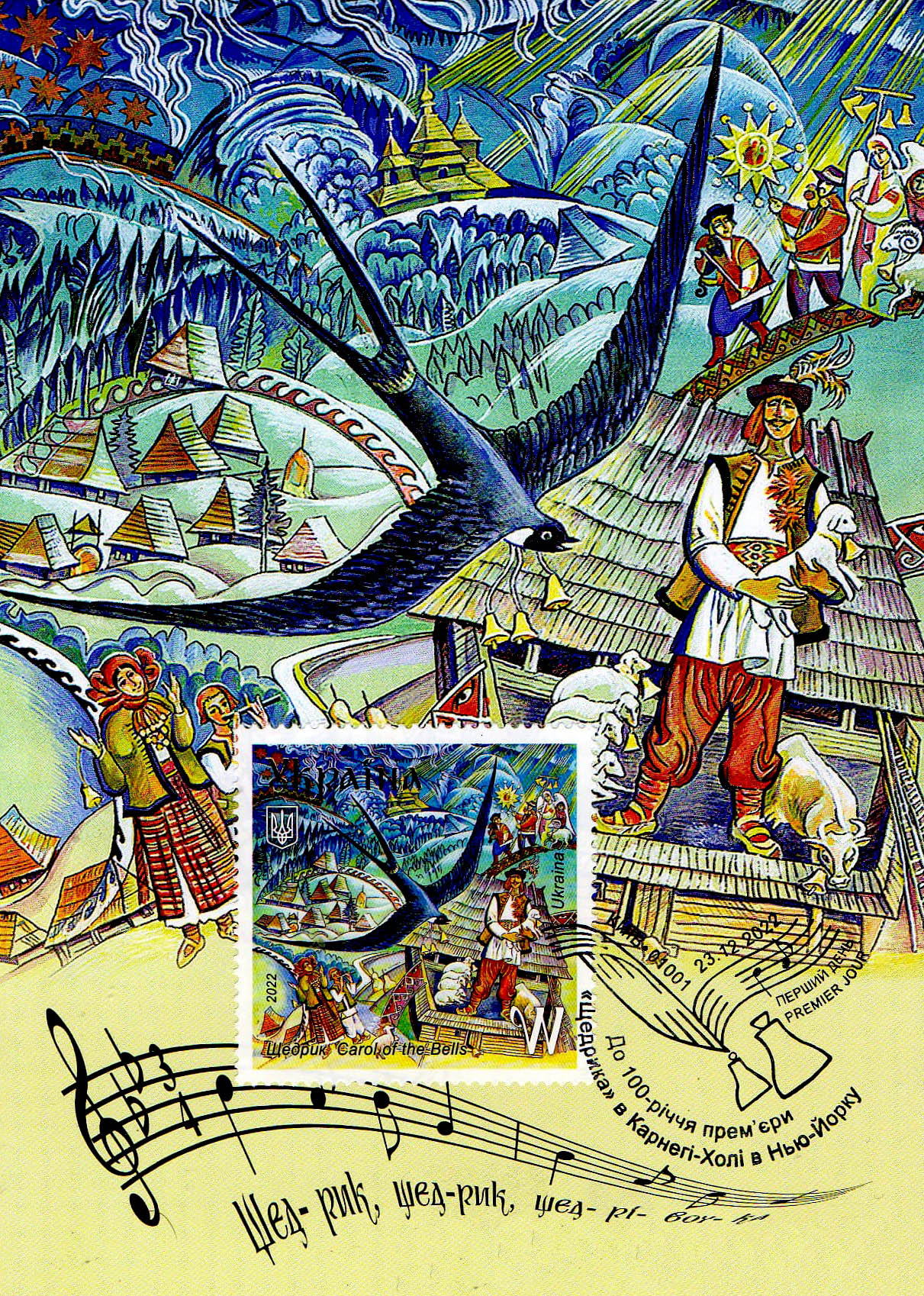
Ukrainian postcard commemorating the folk song”Shchedryk” source of “Carol of the Bells”

After a brief look at the variable date chosen to celebrate the New Year throughout European history, we take some time to rethink our modern understanding of what constitutes the Christmas season.  The common notion that the season ends on December 25 or January 1, possibly including the weeks leading up to those dates, in historical understanding, was reversed, with Dec. 25 representing the start of Christmastide, which at the very least ran until Epiphany (Jan. 6) or Candlemas (Feb. 2).

The merger of Christmas and Carnival is not only aided by the historically later end date of Christmastide, but also the variable start date for Carnival. A number of regional dates preferred for those festivities are discussed with Germany’s initiation of festivities on November 11 being the earliest.

Another reason to suspect that Carnival inherited some of its customs from Carnival is the carnivalesque quality of the Christmas Feast of Fools celebrated anywhere from Dec. 26 to January 6.  The wild, and sometimes dangerous revels celebrated on those days (and discussed in Episode 100) were ended by local bishops at roughly the same time that Carnival celebrations in France and Germany emerged, suggesting  re-channeling of anarchic impulses and customs.

Our discussion then turns to the Roman New Year, the January Kalends, which likely inspired chaotic elements around the Feast of Fools. Of particular interest here are accounts of celebrants dressing in animal hides and horns. a custom that seems to have survived in certain Carnival traditions, including a number discussed in my Carnival book.  One of these, the Kurent of Slovenia, who happens to be rather similar to the Austrian Krampus across the country’s northern border.

In Western Bulgaria too, another Carnival figure, the Kuker, in western regions also makes  use of animal hides and horns (as well as bells).  Bulgaria also provides us with an interesting 20th-century case study of the merger of the traditions of Christmas (or “Surva,” the Bulgarian New Year) merging with springtime fertility customs of Carnival, both strands being associated with the Kuker.

We wrap up with a brief look at Slavic celebrations of the Christmas cycle as Koliade (various spellings), a name for Christmastide and the customs associated with it, particularly door-to-door “good luck visits” incorporating short plays and songs, kolyadka in Ukrainian, the original of “Carol of the Bells” (Shchedryk/”Bountiful Evening”) being one of these songs
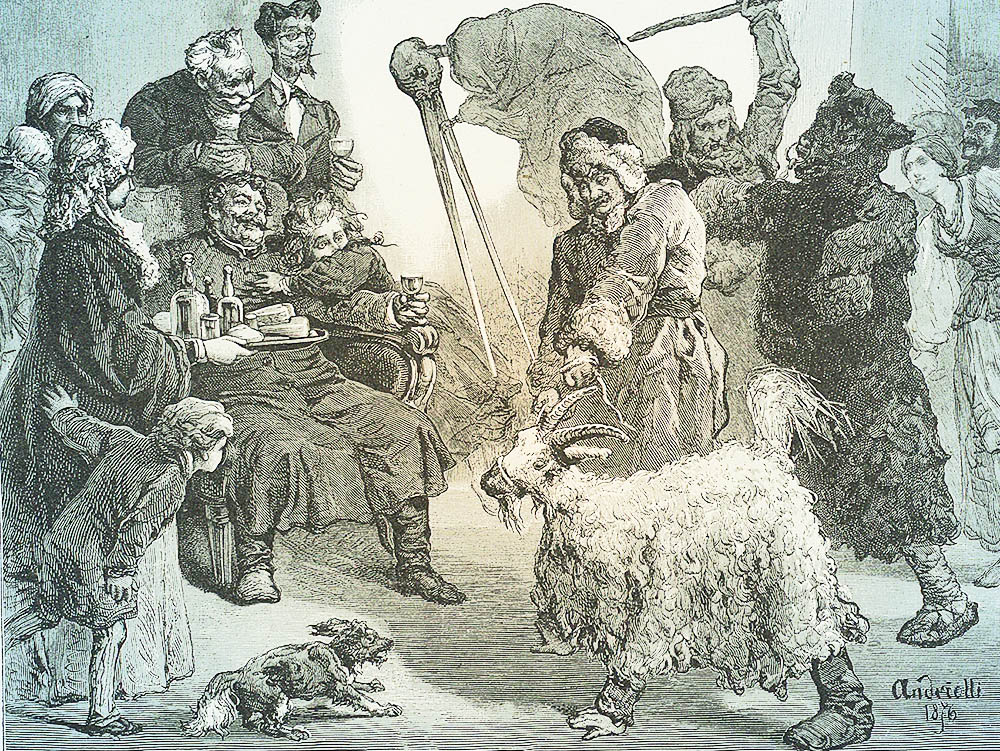
“New Year’s Carols” (Kolędnicy noworoczni) from “A Polish Year in Life, Tradition and Song” (1900).

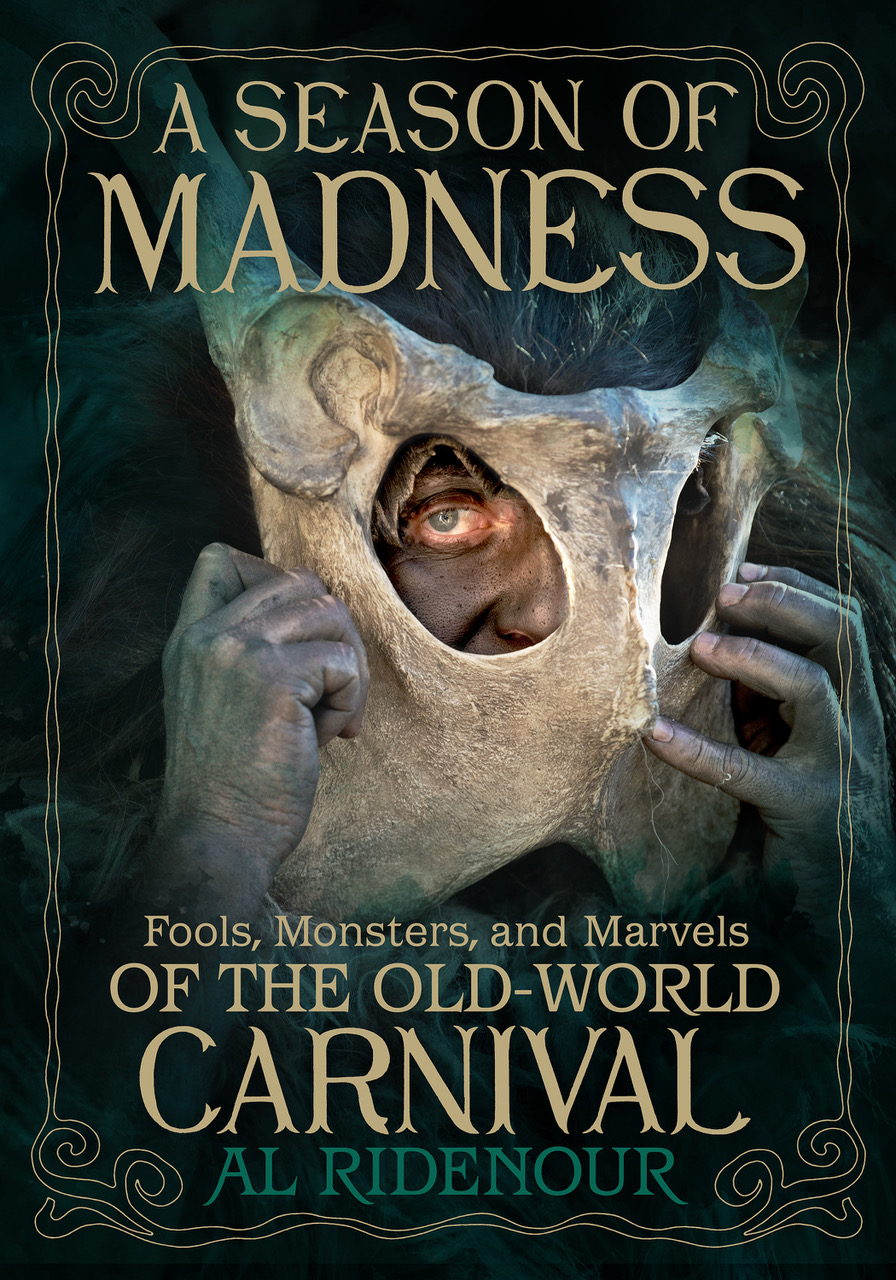
The sources for this show are Mr. Ridenour’s books The Krampus and the Old, Dark Christmas and A Season of Madness, Fools, Monsters, and Marvels of the Old-World Carnival.


Halloween Fortune-Telling Party

Halloween Fortune-Telling Party

This year, in the tradition of Halloween fortune-telling, we have an interactive divination game you can play at home.  It comes from aa 19th-century book on cartomancy called, The oracle of human destiny: or, the unerring foreteller of future events, and accurate interpreter of mystical signs and influences; through the medium of common cards.

TO PLAY ALONG,  you will need an ordinary DECK OF CARS or you could can draw your cards from a VIRTUAL DECK  like the one on deck.of.cards. (https://deck.of.cards).

You will also need to know the ELEMENTAL GROUP of your ASTROLOGICAL SIGN.

They are:

FIRE SIGNS: Aries, Leo, Sagittarius

EARTH SIGNS: Taurus, Virgo, Capricorn

AIR SIGNS: Gemini, Libra, Aquarius.

WATER SIGNS: Cancer, Scorpio, Pisces.

Fortunes read fall into these categories (in this order):

Absent Friends and Relatives
Travel
Friendship and Enmity
Health and Longevity
Property Lost
Love
Wealth and Fortune
Success
A Potential Spouse
Happiness, Misfortune

There are 88 fortunes provided, so you’ll have more fun listening with friends who have different astrological signs. Or write down the signs of absent friends and draw cards on their behalf.

HAPPY HALLOWEEN!


Pumpkins, Turnips, and Spooklights

Pumpkins, Turnips, and Spooklights

The Halloween Jack-o’-lantern, made from pumpkins in the US and originally turnips in the UK, began its existence as a wisp of glowing marsh gas or “spooklight.” We begin our episode with a montage of modern American spooklights including that of Oklahoma’s “Spooklight Road,” North Carolina’s Brown Mountain, and the flying saucers sighted in Michigan in 1966, famously identified by investigator Allen Hynek  as “swamp gas.”

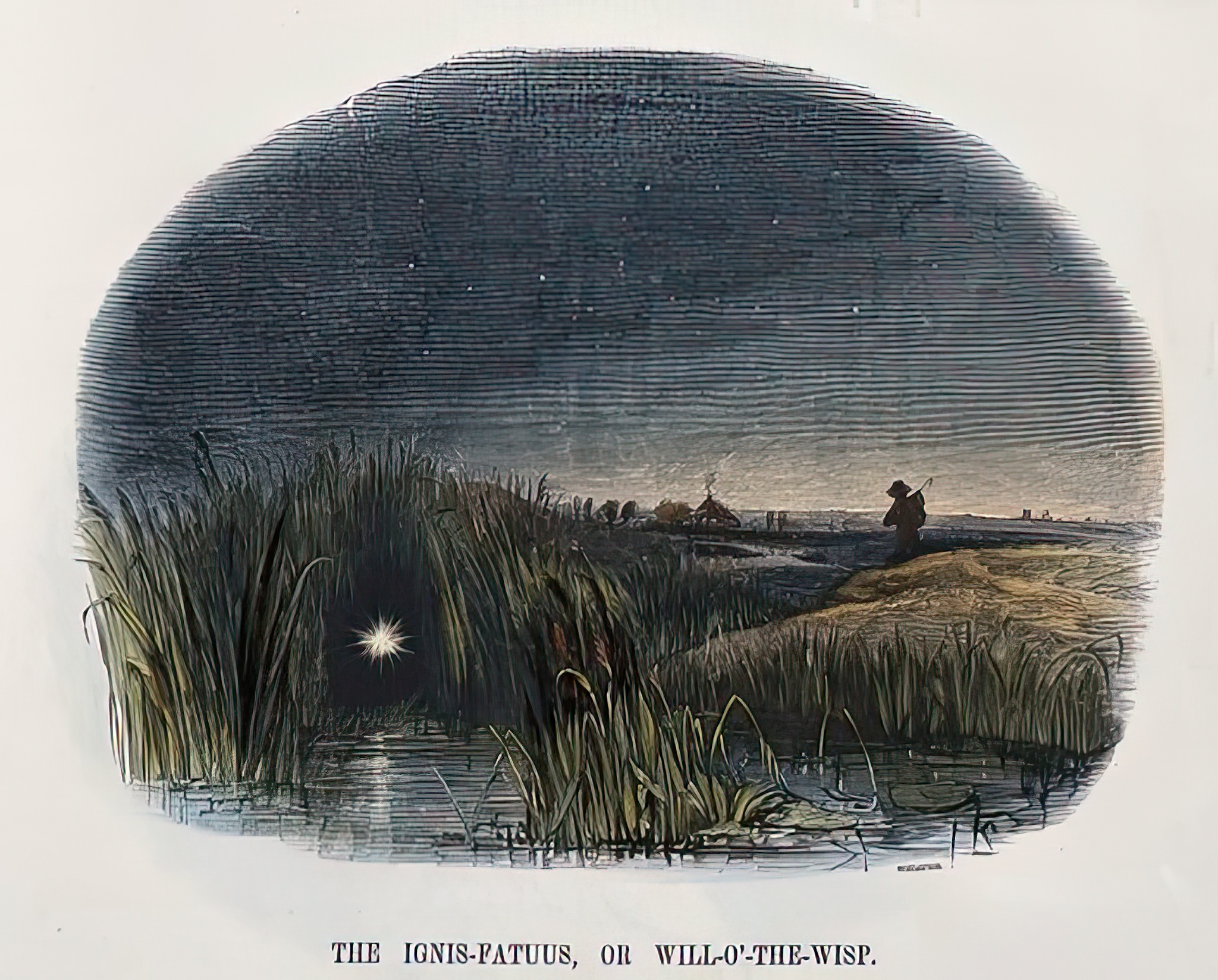
“Jack-o’-lantern”  was just another name given to what’s more widely known now as a Will-o’-the-wisp — a wavering, bobbing light seen in marshy places, understood as mischievous spirit intent on leading travelers off course and into their doom in muck and mire.  Flaming methane produced by rotting vegetation in such environments, is said to the the cause of the phenomenon, though the mode of ignition is still largely a matter of debate. The Latin name for such lights, ignis fatuus  (fool’s fire), was also applied to phenomena having nothing to do with swamps, as it’s been used interchangeably with “St. Elmo’s Fire” to describe electrical discharges seen on ships; masts and other rodlike protrusions when atmospheric conditions are right. We hear a dramatic first-person account from 1847, in which St. Elmo’s Fire (identified by antiquarian Henry Duncan as ignis fatuus) appears on a coachman’s whip during a storm.

A mirage in a marsh. Coloured wood engraving by C Whymper. Gas. Contributors: Charles H Whymper (1853–1941).

We then hear what scientists of the 16th and 17th century made of ignis fatuus, often relating it  unexpectedly to meteors or luminous insects, while mocking “the superstitions” who imagined it as wandering spirits alight with the flames of Purgatory.

Along with marsh spirits exlusively dedicated to misleading travelers, ignis fatuus could also be a temporary  form  taken by shapeshifting fairy folk like Puck or Robin Goodfellow.  We hear an example of this from  the 1628 pamphlet, Robin Goodfellow, his Mad Pranks and Merry Jests. We also see the term appearing in literature of the 16th and 17th century as a metaphor for treachery or deception, in works by John Milton and William Shakespeare.

We run through the variety of colorful regional names by which Will-o-the-Wisps were known: Bob-a-longs, Pinkets, Spunkies, Merry Dancers, Nimble men, Hinkypunks, and Flibberdigibbets, as well as some female variants including Peg-a-lantern and Kitty with the Candlestick. In Wales, these mysterious lights could be omens of death, also known as “corpse candles,” or “death lights.” Appearing around the home of the dying or at the deathbed, they were also called “fetch lights,” as they would arrive when required to fetch the soul to the other side. In Cornwall, fool’s fire is associated with the piskies, in particular Joan the Wad and her partner Jack-o’-the-Lantern, the former having acquired a mostly positive reputation in the 20th century as a luck-bringer. Mrs. Karswell also reads  some tales of ignis fatuus in the western counties, where the lights are called “hobby lanterns” (from hobgoblin) or  “lantern men.”

We then shift gears to discuss the pumpkin form of Jack-o’-lantern, beginning with a well-circulated Irish origin story. A quick summary: the light carried in a hollowed vegetable (a pumpkin in the New World or turnip in the Old) represents the spirit of a notorious sinner, “Jack,” or “Stingy Jack,” who upon death finds he is too wicked for Heaven and too troublesome for Hell. Consquently, he is condemned to wander the earth till Judgement Day, given the peculiar lantern to light his way.

This, at least, is the most recent version of the tale, but when it first appeared in print, in a 1936 edition of the Dublin Penny Journal, there’s no mention of any hollowed vegetable, much less of Halloween — meaning this “ancient legend” actually evolved as Halloween folklore in the second half of the 20th century.

We then do a bit more myth-busting on the other side of the Atlantic, checking in on Washington Irving’s Legend of Sleepy Hollow, which also turns out not to mention Halloween, nor a carved pumpkin representing the Horseman’s head.  When hollowed pumpkins first are mentioned by the 1840s, they are associated with Thanksgiving rather than Halloween, as in John Greenleaf Whittier’s 1947 poem, “The Pumpkin.”  The next  appearance of a Jack-o’-lantern, in an 1860 edition of a Wisconsin newspaper, is also not associated with Halloween but with an impromptu parade supporting Abraham Lincoln’s presidential run.  It seems that it was only by the end of the 19th century that the hollowed, lighted pumpkin was linked with Halloween, while retaining associations with Thanksgiving into the early 1900s.

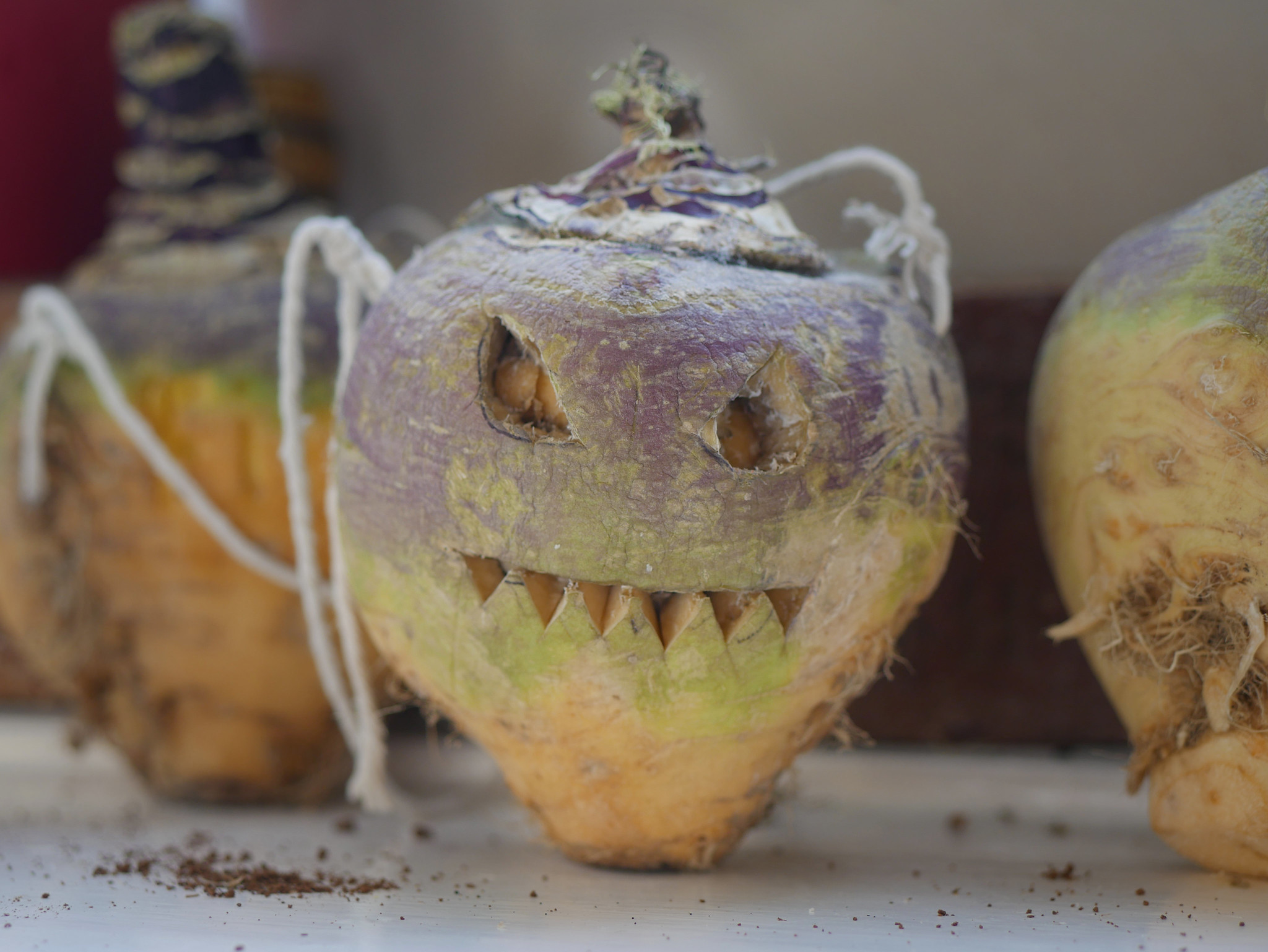
In the UK, hollowed and lighted turnips (occasionally beets or rutabagas) seem to have been around since the early 1800s. Originally, they’re not necessarily associated with Halloween specifically but as something created by mischievous boys eager to scare their neighbors whenever the vegetables became available for such hijinks. A Scottish source, John Jamieson’s An Etymological Dictionary of the Scottish Language 1808), is the first to link them to Halloween pranks, and by the 1890s, we hear of lighted turnips being carried by costumed children (“guisers”) celebrating Halloween in Scotland.

Carved turnip used on the Isle of Man. Courtesy www.culturevannin.im

We then discuss the Jack-o’-lantern’s British evolution, namely, the replacement of  the turnip with the American pumpkin, beginning with their importation in the 1950s.  The process was slow, with both carved turnips and pumpkins used side-by-side in some regions, and the use of carved turnips longer retained in some regions.  Of particular interest here is the Isle of Man, where the Halloween celebration of Hop-tu-naa makes exclusive use of turnip lanterns in costumed door-to-door rounds during which children sing a largely nonsensical song punctuated by the rhyming syllables “Hop-tu-naa.”  An audio snippet of the song is provided courtesy of the Manx organzation Culture Vannin (https://culturevannin.im/).

We wrap up  with some speculations regarding the disappearance of the Will-o-the-Wisp and its evolution through different forms, including the glowing swamp gas theorized to have inspired the 1966 Michigan saucer sightings (and our closing song by Lewis Ashmore and the Space Walkers!)

Rolling Hells and Land-Ships

Rolling Hells and Land-Ships

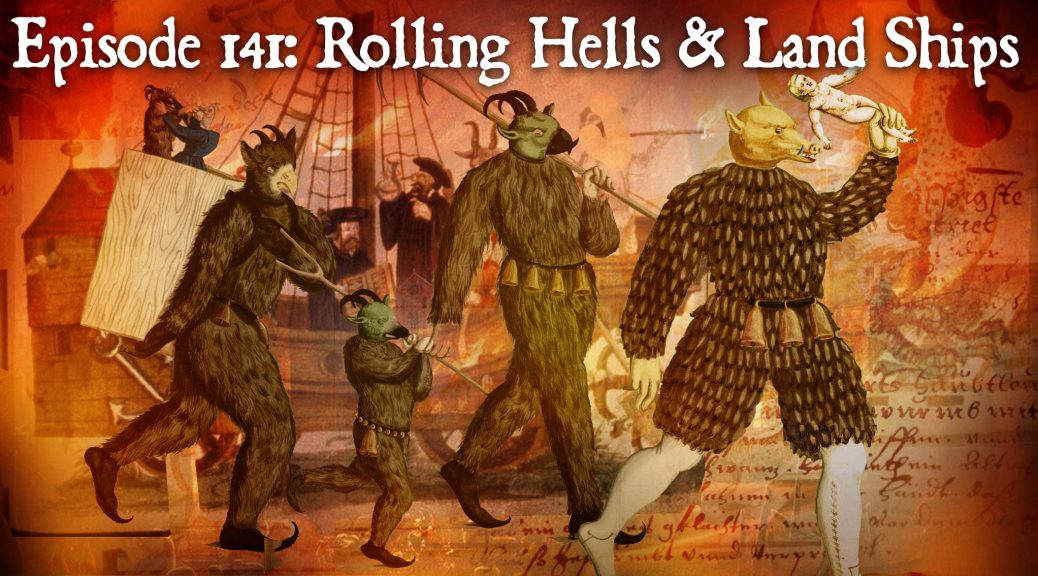
During the 15th-century, citizens of Nuremberg, Germany, experienced spectacular Carnival parades highlighted by the appearance of floats known as “hells.”  Featuring immense figures, including dragons, ogres, and man-eating  giants, these hells were also peopled with costumed performers and enhanced with mechanized effects and pyrotechnics.

In this episode, adapted from a chapter of Mr. Ridenour’s new book, A Season of Madness: Fools, Monsters and Marvels of the Old-World Carnival, we examine the Nuremberg parade, the Schembartlauf, as it evolves from costumed dance performances staged by the local Butcher’s Guild in the mid-1 4th-century into a procession of fantastic and elaborately costumed figures, and finally — in 1475 – into a showcase for the rolling hells.

We begin, however, with an examination of a historical anecdotes sometimes presented as forerunners of  the Carnival parades, and of the Schembartlauf in particular, including two sometimes put forward to support a “pagan survival” theory.  The first involves a ceremonial wagon housing a figure of the putative fertility goddess, Nerthus, hauled about by Germanic peoples in the first century and mentioned in Tacitus’ Germania.  The second, also involving a wagon with fertility figure, is described by Gregory of Tours as being hauled through farmers’ fields in the 6th-century.

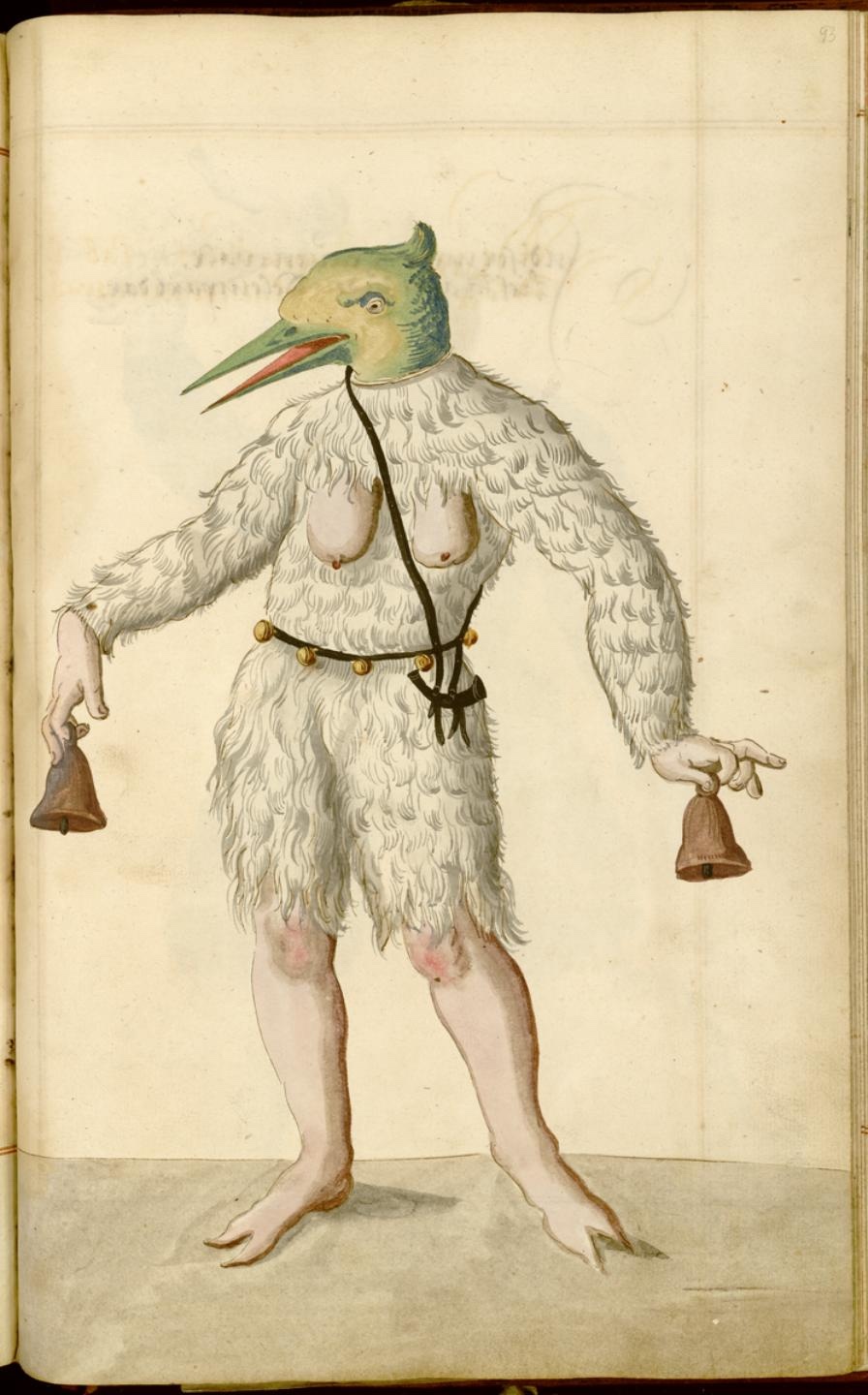
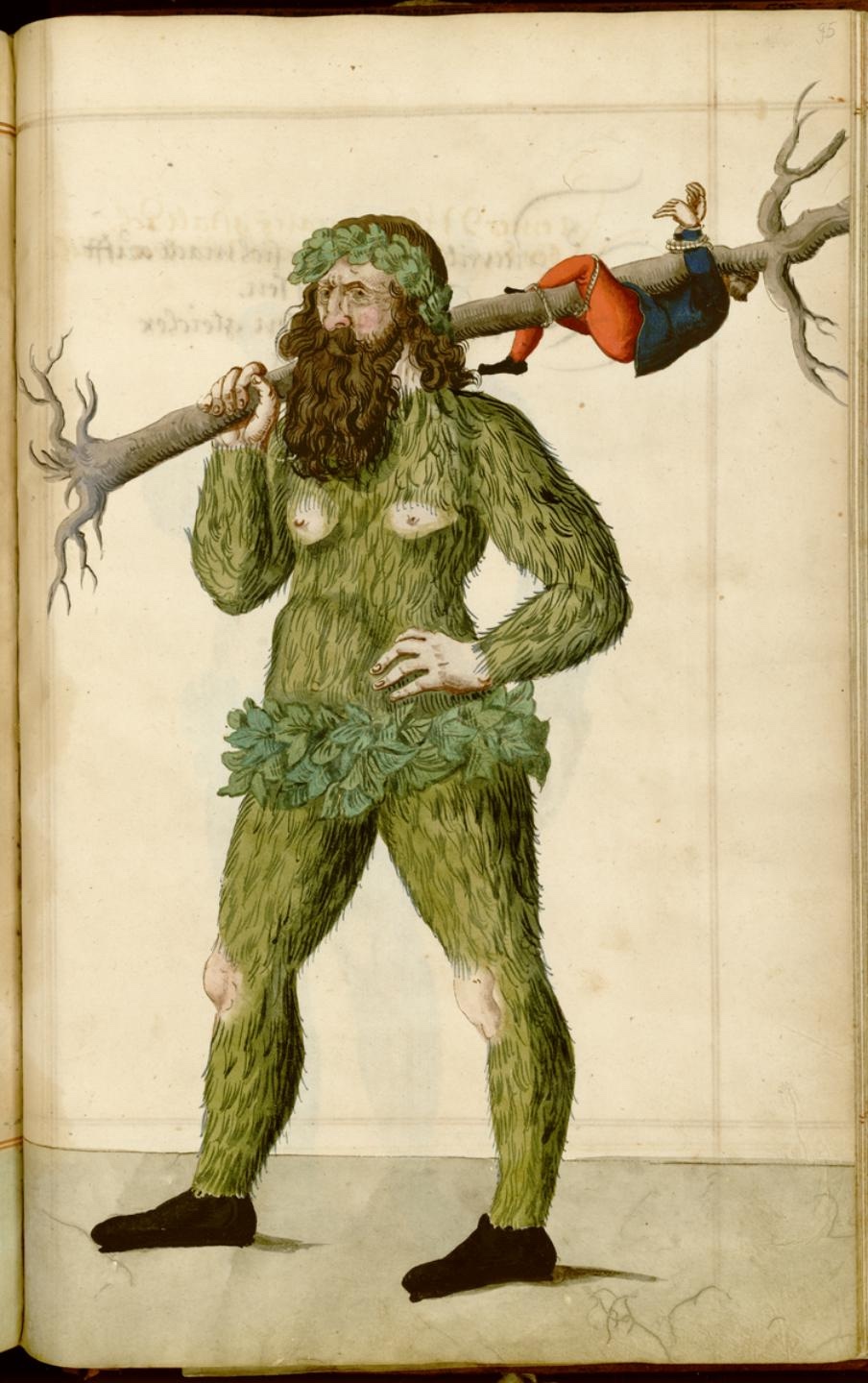
Period illustration of costumed figure from a Schembartbuch.

A third case involves the mysterious “land-ship,” a full-scale wheeled ship hauled from Germany into Belgium, and the Netherlands in 1135. Mentioned exclusively by the Flemish abbot, composer, and chronicler Rudolf of St. Trond in his Gesta Abbatum Trudonensium (Deeds of the Abbots of Trond), it’s characterized by the abbot as a sort of pagan temple on wheels and locus of orgiastic behavior, the precise purpose and nature of this peculiar incident remains largely a mystery.

We then hear a comic incident imagined in the early 13th-century story of the knight Parzival as told by Wolfram von Eschenbach. By way of analogy to the character’s ludicrous behavior, Carnival is mentioned for the first time, or more specifically von Eschenbach use the German word for Carnival, specifically the Carnival of Germany’s southwest called “Fastnacht.”

Our story of the Schembartlauf concludes the show with a description of its ironic downfall through local intrigues fired by the Protestant Reformation. Worth mentioning also, in our Schembart segment, is the heated scholarly debate around objects depicted in period illustrations, which look for all the world like oversized pyrotechnic artichokes.

New Patreon rewards related to Mr. Ridenour’s Carnival book are also announced in this episode, along with related Carnival-themed merch in our Etsy shop, including our “Party Like it’s 1598” shirts featuring Schembart figures.

Book Trailer

Book Trailer

Here’s a new book trailer I put together for A Season of Madness: Fools, Monsters, and Marvels of the Old-World Carnival.  This one’s slanted toward who may have been interested in my Krampus book.  The book is available in the US at better bookstores, Amazon, Barnes and Noble, directly from the publisher, Feral House,  and via other online booksellers.
The Unknown Carnival

The Unknown Carnival

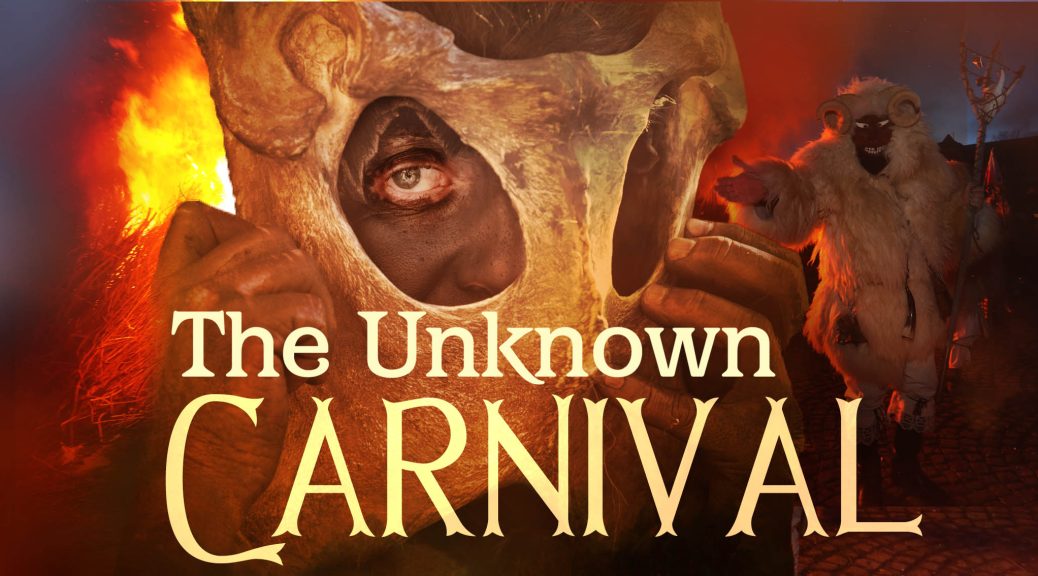
Mr. Ridenour introduces his new book “A Season of Madness: Fools, Monsters, and Marvels of the Old-World Carnival,explaining how the project grew out of his research for “The Krampus and the Old, Dark Christmas.”  In this episode, he sketches out chapter themes and topics, from ancient Rome to modern Bulgaria, focusing particularly on cultural hinterlands where festivities still echo the cruel realities of the old, agricultural world and where medieval Christianity intertwines with pagan practice. The Carnival portrayed is at once beautiful, strange, and savage. Spring is welcomed by clowns waving inflated pig bladders. Stalking sheepskin monsters brandish clubs bristling with hedgehog spines, and plows are dragged over cobblestone streets by celebrants wearing masks painted with cow’s blood. Folk horror fans take heart as the Old World welcomes Spring!

Available now for pre-order.  US Publication date, May 6, 20205.

A few advance reviews of the book:

“Sumptuously illustrated and written with clarity, eloquence, and wry humor, “A Season of Madness” is one of those rare books that can pass muster as an academic study yet also provide a good read. Al Ridenour’s meticulous research exposes the subtleties and outrageous quirks of a topic you didn’t know you wanted to learn about until you picked up his book. Under his direction, the madness once again reigns, as the neglected history of European Carnival is placed center stage before the reader, in all its seedy, wild, and triumphant glory.”

—Dr. Paul Koudounaris, author and photographer of:Faithful unto Death,” “Heavenly Bodies,” and “Empire of Death

A Season of Madness is a fantastic carnival of a book. Equal parts irreverent and erudite, it lovingly captures the depth, complexity, and subversive nature of the carnival, from its ancient roots to modern expression. Gorgeously illustrated, intellectually hefty, and also fun, it is a seductive introduction to the material cultures, legends, and history of this perennially fascinating and slippery subject.”

Joanna Ebenstein, Founder and Creative Director of Morbid Anatomy

La Befana, the Witch of Twelfth Night

La Befana, the Witch of Twelfth Night

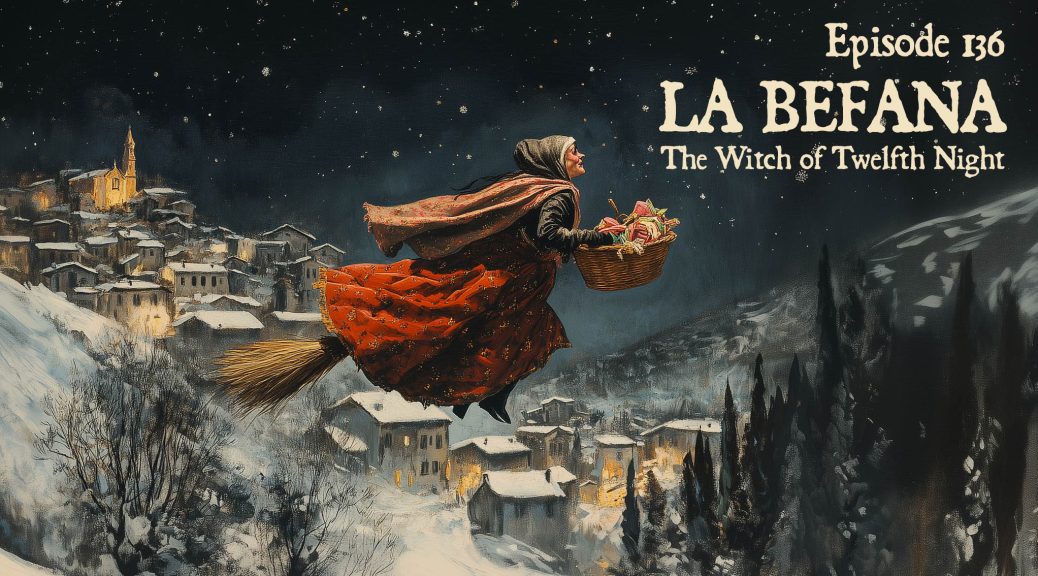
A short extra episode on Befana, the gift-bringing Italian witch associated with Twelfth Night, the end of the Christmas season.  Included in the show is material from the book, “The Krampus and the Old, Dark Christmas,” traditional music of the season, audio from actual celebrations, and a few pop songs associated with la Befana.

Befana on the Piazza Navona, Rome.
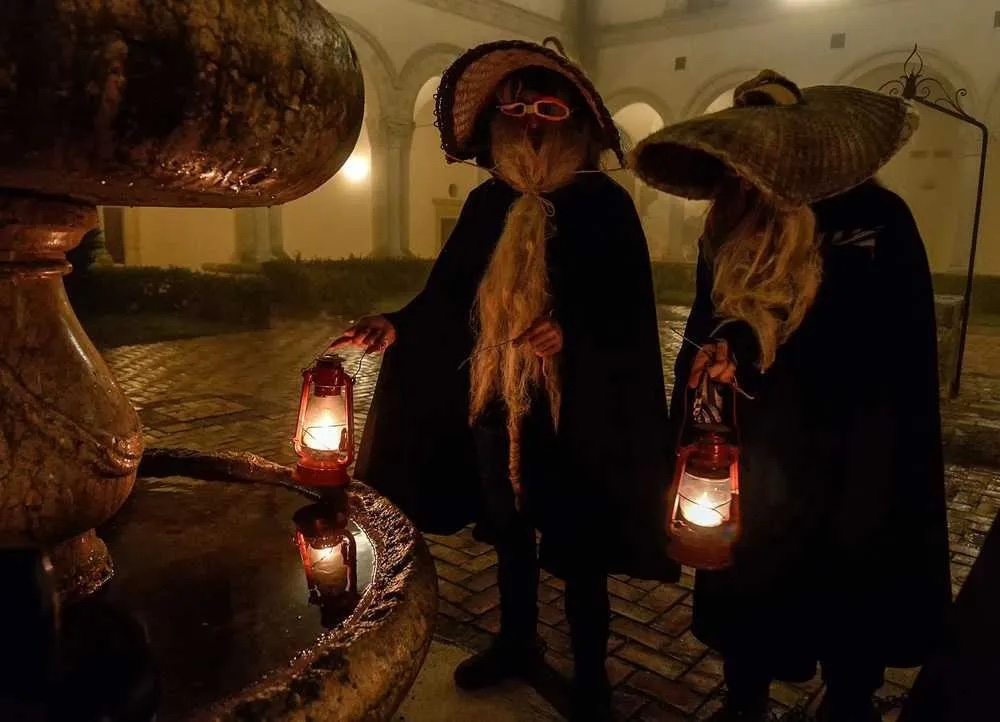
The Cucibocca of Montescaglioso
A Christmas Ghost Story VI

A Christmas Ghost Story VI

Tonight we bring you our sixth annual Christmas ghost story, a tradition particularly beloved in Victorian and Edwardian Britain. First published in 1908, and set in the days before Christmas, the tale is by British writer Algernon Blackwood (from whom we earlier heard “Ancient Lights“) and whom many listeners will know through his other works, particularly, The Wendigo or The Willows.  Throw a log on the fire, refill the brandy, and settle back for Mrs. Karswell’s reading of “The Kit Bag.”

An Old-Fashioned Halloween Party

An Old-Fashioned Halloween Party

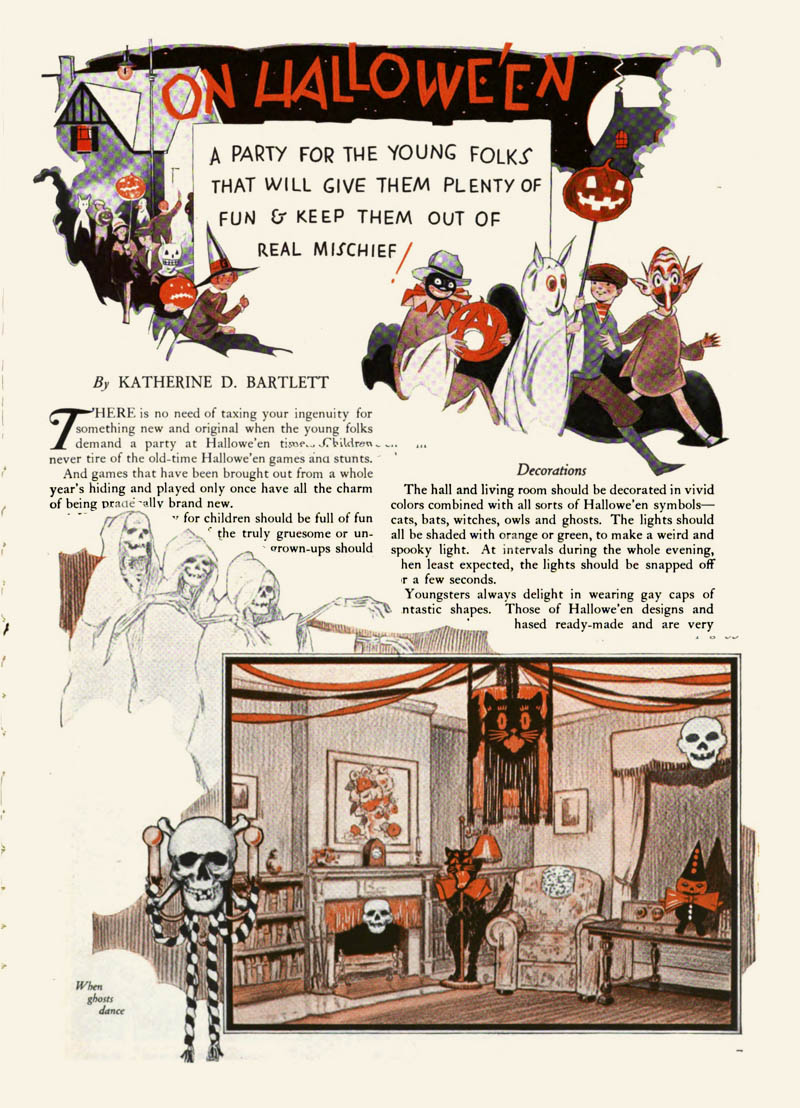
Tonight we recreate for you elements of an old-fashioned Halloween party as experienced in the 1920s or ’30s. Foods, games, spooky stories and poems in an extra-long Halloween episode.

For more retro delights of the era, listen to Episode 35 “Vintage Halloween.”

Swan-Upping and Other Curious British Customs

Swan-Upping and Other Curious British Customs

Explore some curious British Customs with us, including those of Midsummer, swan-upping, egg-hopping, St. Bartholomew’s knives, and the violent tradition of St. Michaelmas “ganging.” Our source for this episode is the 1911 volume by T. F. Thistelton Dyer, British Popular Customs Present and Past. Illustrating the Social and Domestic Manners of the People. Arranged according to the Calendar
of the Year.