Tag: history

Born with a Veil

Born with a Veil

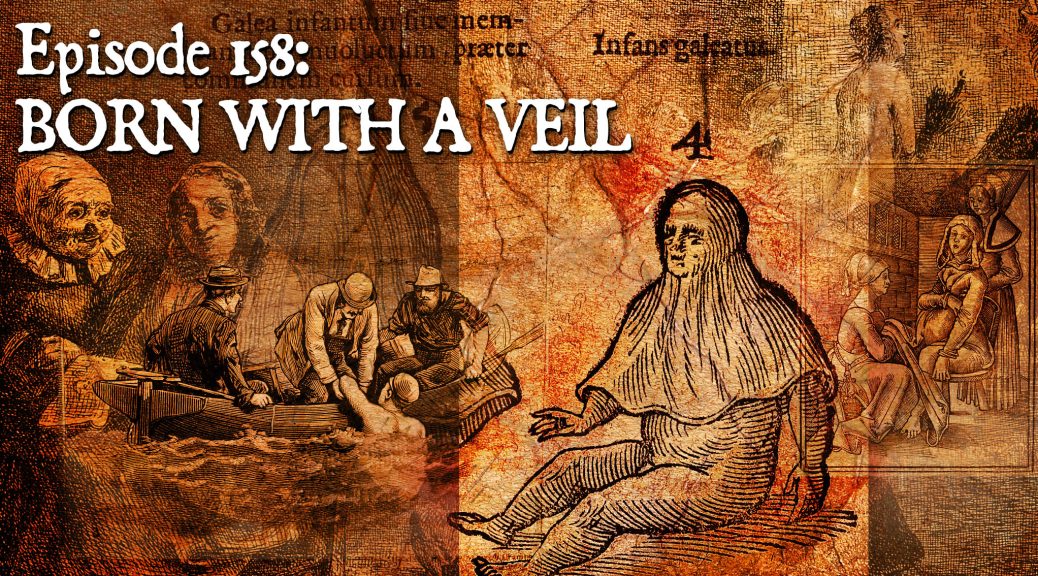
To be “born with a veil” (or caul) was once regarded as far more than an unusual circumstance of birth. Being born with a caul—a portion of the amniotic membrane adhering to a newborn’s head or face—is exceedingly rare, but across centuries of European folklore it has been interpreted as a visible mark of destiny. Those born with one might be exceptionally lucky, possess healing powers or second sight, or enjoy supernatural protection. In darker traditions, however, the same sign could mark a future witch, vampire, or uncanny wanderer between worlds.

We  begin with a quoted passage from Stephen King’s The Shining, in which it’s revealed that the psychically gifted boy, Danny, is born with a veil and then go on to explore the colorful vocabulary once used to describe the caul. Across Europe, the membrane was imagined as a cap, hood, helmet, veil, cloak, or even a “shirt.” Such expressions as the Scottish “sely hoo,” or blessed hood, and various European equivalents of “lucky cap” and “victor’s cloak” reveal how closely the caul became associated with good fortune.

Next, we explore the earliest written references to caul superstition. A fourth-century biography of the short-lived Roman emperor Diadumenian claims that he was born with a strange membrane resembling a diadem. The same source remarks that midwives sold preserved cauls to lawyers who believed they would bring success in court. Medieval clerical writings likewise condemn officials who carried cauls as charms to silence their opponents.

From there, the episode turns to the long practice of preserving cauls as family treasures. Surviving examples include a fragment enclosed in a locket made for John Monson in 1597 and the caul of King Frederik III, kept in a silver casket in the Danish royal collections. Seventeenth-century wills describe cauls mounted in jeweled gold settings and passed down as heirlooms believed to ensure a family’s continuing prosperity.

We then address the caul’s most famous power: protection from drowning. By the eighteenth century, cauls were carefully dried on paper and sold to sailors. Newspaper advertisements addressed “gentlemen of the Navy” and offered them as proven safeguards for long voyages. Dickens satirized the trade in the opening of David Copperfield, whose caul attracts only one bidder—an attorney offering cash and sherry, but refusing to pay enough to guarantee himself against drowning.
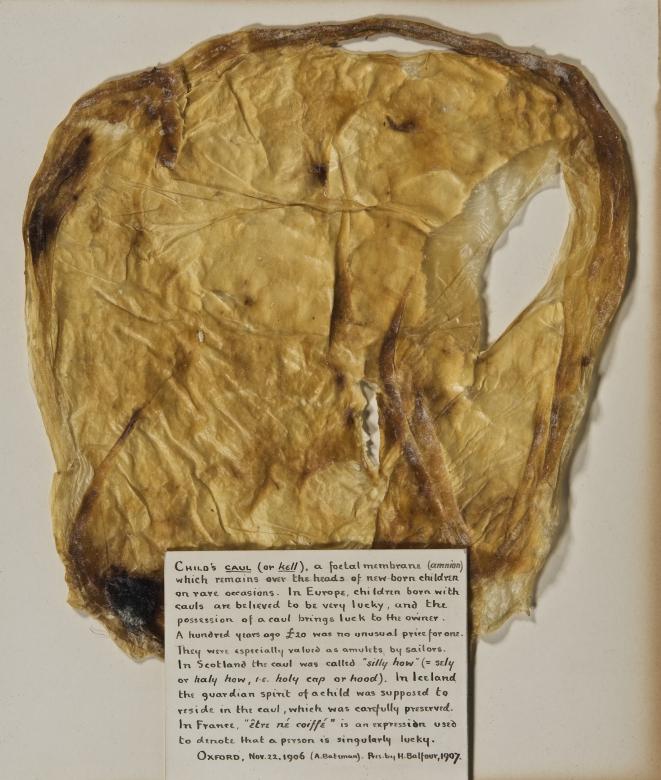
Caul kept as sailor’s charm displayed at Pitt Rivers Museum, Oxford.

Mrs. Karswell then shares some amusing 19th-century anecdotes found in the long-running Oxford University publication, Notes and Queries. One report has a caul-bearing child who hild floated like a cork whenever his mother tried to bathe him. Another describes a prognosticating caul that physically transformed in sympathy to events unfolding in the life of the person consulting it.

We then travel to Iceland, where fetal membranes were associated with the fylgja, a guardian spirit or external portion of the soul. The afterbirth could not safely be discarded, exposed to animals, or burned, lest the child lose this spiritual companion. Yet the caul’s magical potential also made it dangerous: witches were said to use it in love potions, and a seventeenth-century French royal midwife warned her colleagues never to preserve one because sorcerers might obtain it.

The episode then moves eastward, where caul folklore grows considerably darker. In Romania and Poland, those born beneath the membrane might be destined to become strigoi or other vampiric beings after death. In Slovenia, Croatia, and Serbia, however, caul-born men could become supernatural defenders known as Krsniki or Zduhaći. Their spirits left their bodies at night to battle dragons, witches, night-hags, and rival spirit warriors threatening the community’s health, weather, and harvest.

Next, we encounter their Italian counterparts, the Friulian Benandanti, or “good walkers.” Sixteenth- and seventeenth-century inquisitorial records describe men and women who claimed that everyone born with a caul was summoned in adulthood to fight witches during nocturnal spirit journeys. Their preserved “little shirts” were worn around the neck, blessed with prayers and Masses, and believed to protect soldiers or help lawyers win cases.

Finally, we return to the sea with the curious modern discovery of a preserved caul purportedly belonging to a survivor of the the sinking of the Titanic. Its provenance may be uncertain, but the topic at least provides an excuse to close out with a snippet of the uniquely grim yet lighthearted folk song, “When the Great Ship Went Down.”
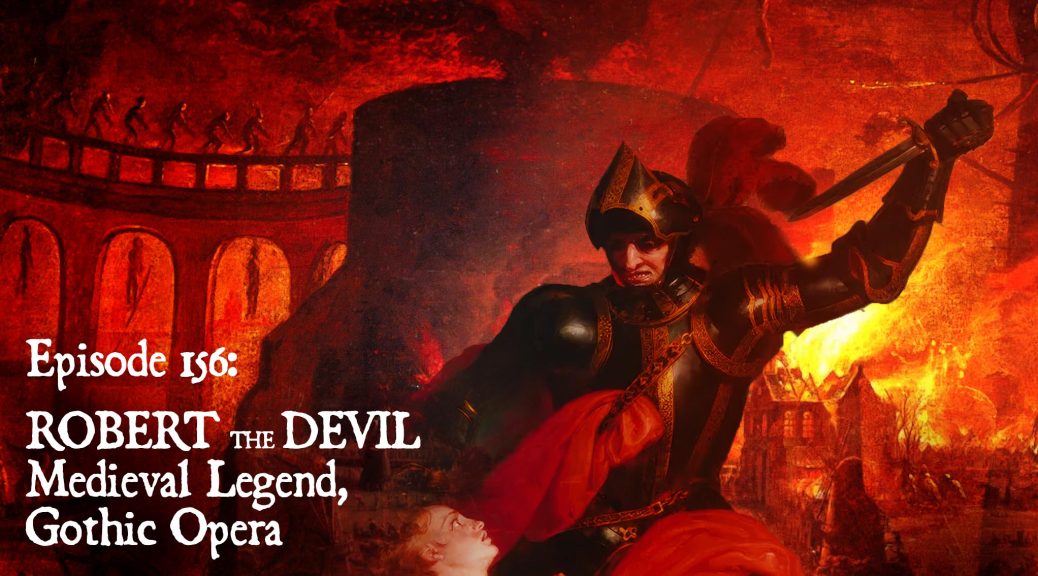
Robert the Devil: Medieval Legend, Gothic Opera

Robert the Devil: Medieval Legend, Gothic Opera

Robert the Devil is a supernatural medieval legend that inspired a 19th-century French opera, which incorporates key elements from a seminal Gothic novel.  The opera and legend are substantially different but both interesting.

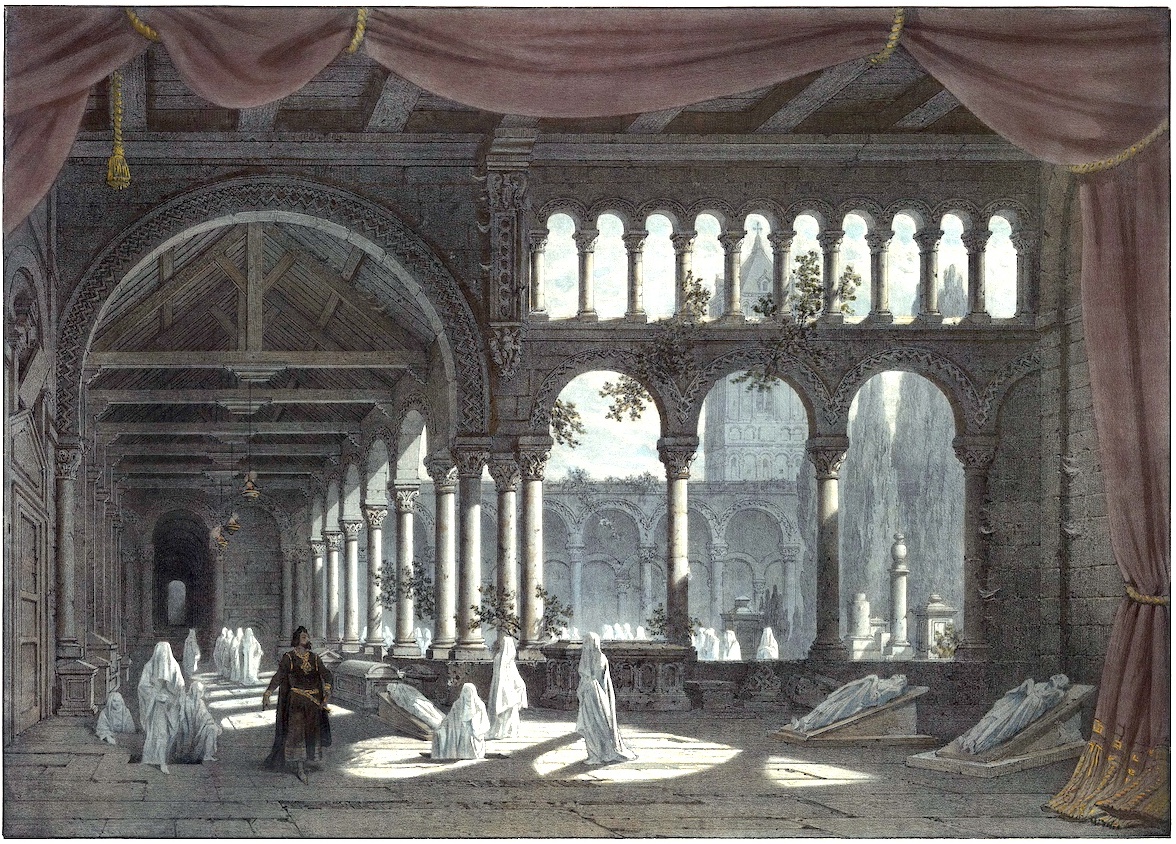
We begin with Giacomo Meyerbeer’s 1831 opera, Robert le diable, which gained notoriety for a ballet sequence in Act III, which portrays an attempted seduction of the hero, Robert, Duke of Normandy, by the ghosts of corrupted nuns, freshly risen from their crypts. The scene is not found in the original legend, but as we learn, was borrowed from a particularly sensationalistic early Gothic novel,The Monk, written by Matthew Gregory Lewis in 1764.   We also learn that Meyerbeer’s chief librettist, Eugène Scribe later went on to crib another storyline from Lewis’ The Monk for the 1854 opera by composer Charles Gounod, La nonne sanglante (“the bloody nun”).

Rendering of cloister set for Paris Opera premiere.

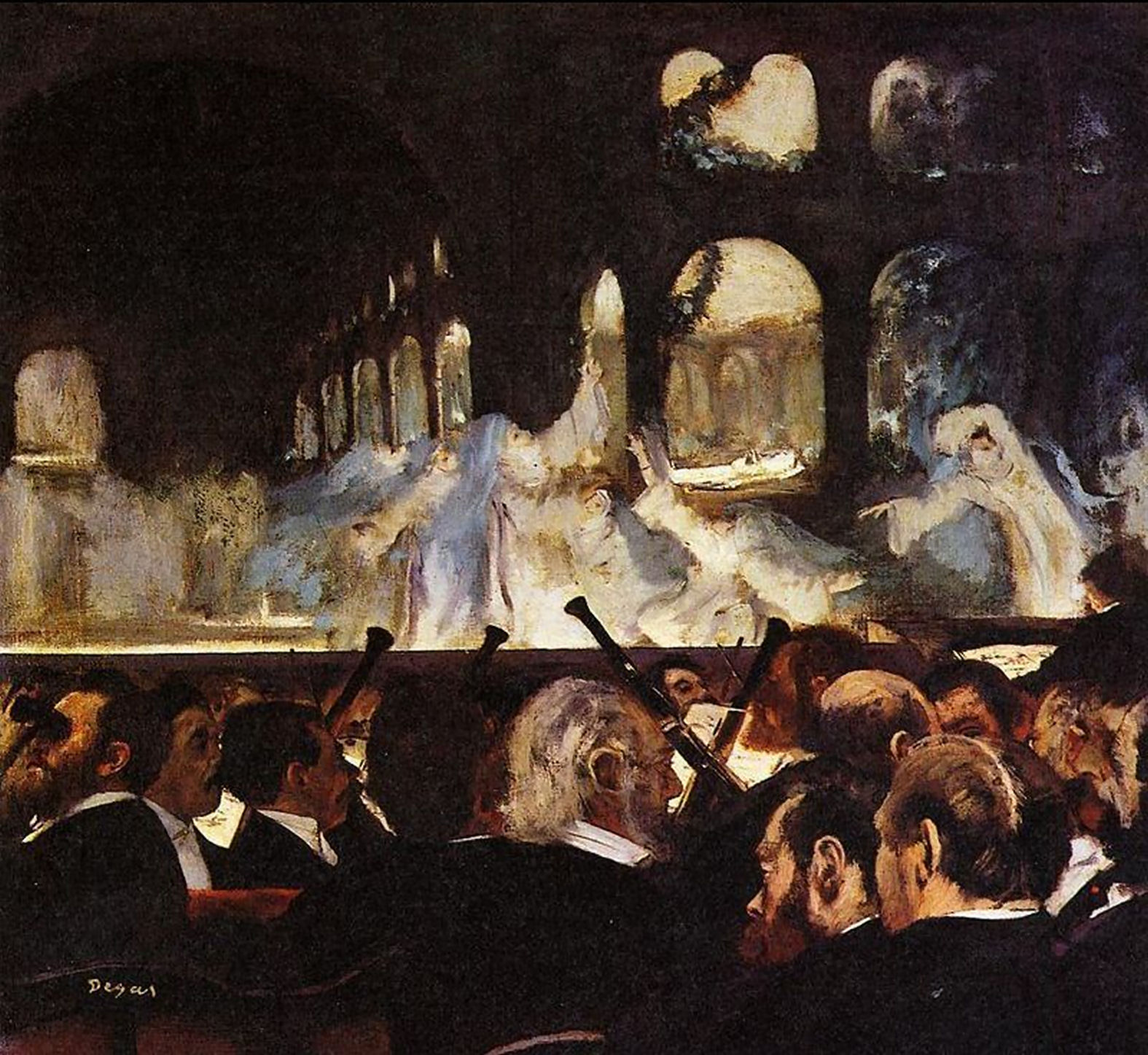
Along the way, we learn how Robert le diable helped save the financially imperiled Paris Opera after its royal subsidy had been withdrawn following the July Revolution of 1830.  Along with public curiosity about the scandalous ballet, ticket sales owed much to the 19th-century equivalent of special effects — flashy and innovative stagecraft (new gaslight design, trapdoors, floating will-o-the-wisps, etc.) and a spectacular set replicating a ruined gothic monastery. Hans Christian Andersen, George Sand and Frédéric Chopin lavishly praised the production. Honoré de Balzac and Alexander Dumas worked mentions of the opera into their novels. Edgar Degas painted not one but two renderings of the Ballet of the Nuns.

Edgar Degas’ rendering of the “Ballet of the Nins”

The opera also gave birth to a new style of ballet, one linked to Romanticism’s interest in the supernatural: ballet blanc, “white ballet” named for the innovative long, flowing skirts that lent themselves to wafting movements suggestive of misty wisps moving in the darkness. The opera’s 1847  London premiere was attended by Queen Victoria and featured superstar soprano Jenny Lind as Robert’s sister.  Traffic came to a standstill as unruly spectators mobbed the streets hoping for  glimpse of either celebrity.

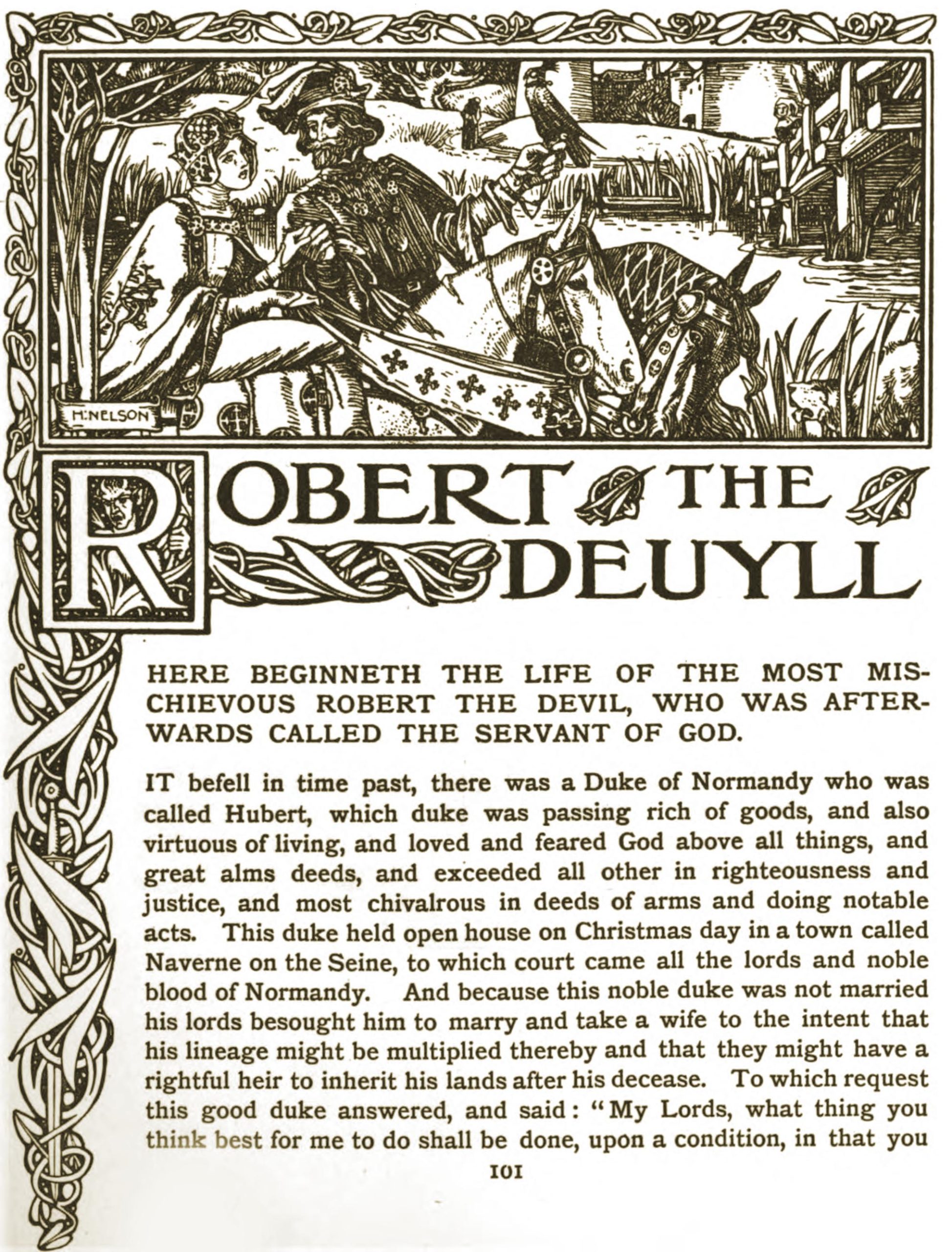
The second half of our episode tells the original story of Robert the Devil.  It first appeared around 1250, sketched out in short form by the Dominican monk, Étienne de Bourbon, in a collection of exempla, or moral tales intended to be used by priests in their homilies.  A couple decades later, details were filled out in a longer, anonymous  poem, preserved in France’s National Library. Then by the late 14th century, it was rendered as a miracle play in “Forty Miracles of Our Lady,” commissioned by a guild of Parisian goldsmiths. By 1500, the story had arrived in Britain. That year, Wynkyn de Worde, assistant to pioneering London printshop owner Thomas Caxton, issued a chapbook prose translation hewing close to the French 14th-century poem.

I found the Wynkyn de Worde text reproduced in a handsome 1904 volume complete with line illustrations, decorative initials, and borders reminiscent of the Arts and Crafts books of William Morris.  As promised in the episode, here is the link to that book: Robert_the_Deuyll.pdf.  (Visit the show notes on the Bone and Sickle website if you can’t click link).

As for the  story itself, it’s best you enjoy it without spoilers as told by Mrs. Karswell.  It’s full of demonic wrath, battles, court intrigue, miracles, pathos, and a very and prolonged peculiar penance.  All told in charming 16th-century language with all the little sound-design extras you’ve come to expect from Bone and Sickle.

Trolls in Medieval Literature

Trolls in Medieval Literature

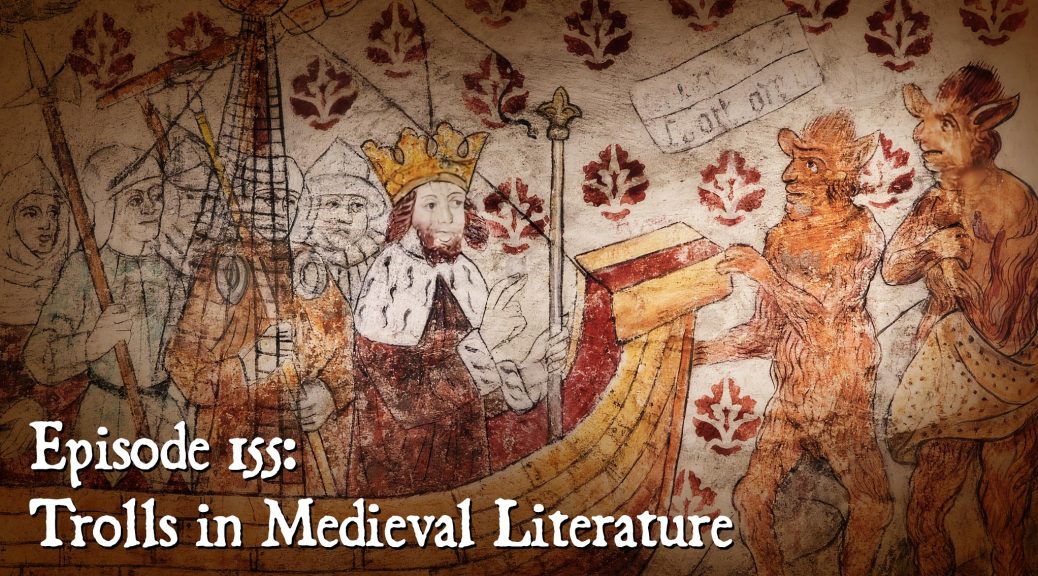
Trolls, as presented in medieval literature, are vastly different from the creatures we encountered in our last episode’s collection of 19th-century Norwegian folktales. These Viking Age trolls are more vividly and gruesomely described, and the “troll-women,” who frequently appear, are akin to witches.

We begin the show with a traditional song from the Faroe Islands, “Trøllini í Hornalondum,” telling the story of St. Olaf battling trolls on the coast of Norway. While the ballad presumably originated in Norway, it was first recorded by the Danish priest and historian, Anders Sørensen Vedel, in his 1591 publication, Hundredvisebogen, (the Book of 100 Ballads.”)

While St. Olaf (King Olaf II) is regarded as the saint who drove paganism from Norway, but this struggle was ongoing with trolls continuing to embody the old pagan world as belied by various tropes — their dislike of church bells, and fear of crosses. We’ll next look at an interesting case from Iceland presenting a direct conflict between a church and troll.  It was collected by the “Grimm of Iceland, Jón Árnason, a librarian and museum curator who published several collections of folktales, beginning in 1852. This one’s from his second volume of Icelandic Folktales, published in 1864.

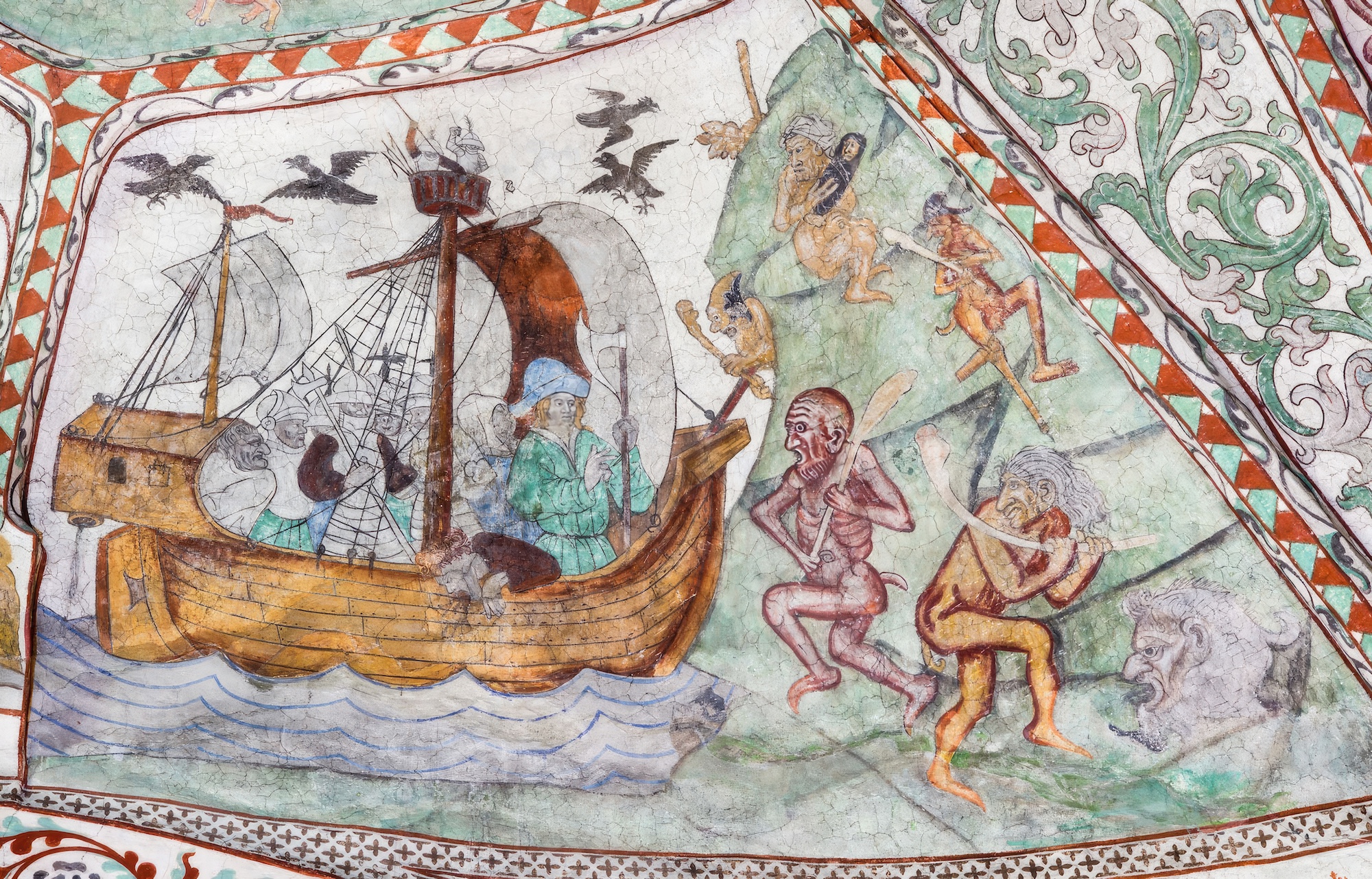
Encountering trolls -- St. Olaf's Journey, fresco by Albertus Pictor, ca 1470, Dingtuna Church, Västerås, Sweden
Encountering trolls — St. Olaf’s Journey, fresco by Albertus Pictor, ca 1470, Dingtuna Church, Västerås, Sweden

After this, we have some general comments on the historical relationship between trolls and giant (jötunn, Þurs and risi) as well as trolls and witches or sorcery (trollldom). Our remaining four stories (the medieval ones) present trolls of the Icelandic saga, epic stories written in Old Norse and relating the adventures of ancestral heroes or rulers, usually with some connection to history but with certain creative embellishments. A subset of the sagas, which take place in their own mythic timeline, the fornaldarsögur were simply written with entertainment in mind and more oriented toward magic and folklore – and trolls, so we’ll lok at a couple of those. And then there’s the þáttr, a sort of short story, sometimes folded into sagas, but often reproduced independently.

As this is a storytelling episode, we won’t spoil the tales with plot outlines, but the sources (in order) are:

  1. The 14th-century þáttr of Thorstein Ox-leg as translated in William Craigie’s 1896 compilation called Scandinavian Folk-lore: “The Trolls in the HeidarWoods.”
  2. A portion of the 16th-century Illuga Saga, translated by Philip Lavender of the Viking Society for Northern Research.
  3. The 14th-century Saga of Grim Shaggy-Cheek as translated by Peter Tunstall.
  4. The Saga of Orm Stórolfsson, as retold by William Craigie in Scandinavian Folk-lore – under the title: “The Giant on Sauðey” (Saudey).

We end with a song “Trøllini Trampa,” (“Trolls’ Tramp”) by the Faroese band, Spælimenninir

Christmas is Carnival: Carols and Calendars

Christmas is Carnival: Carols and Calendars

Historically, the celebration of Christmas and Carnival could overlap, and there is some reason to believe that customs associated with the former were inherited by the latter.

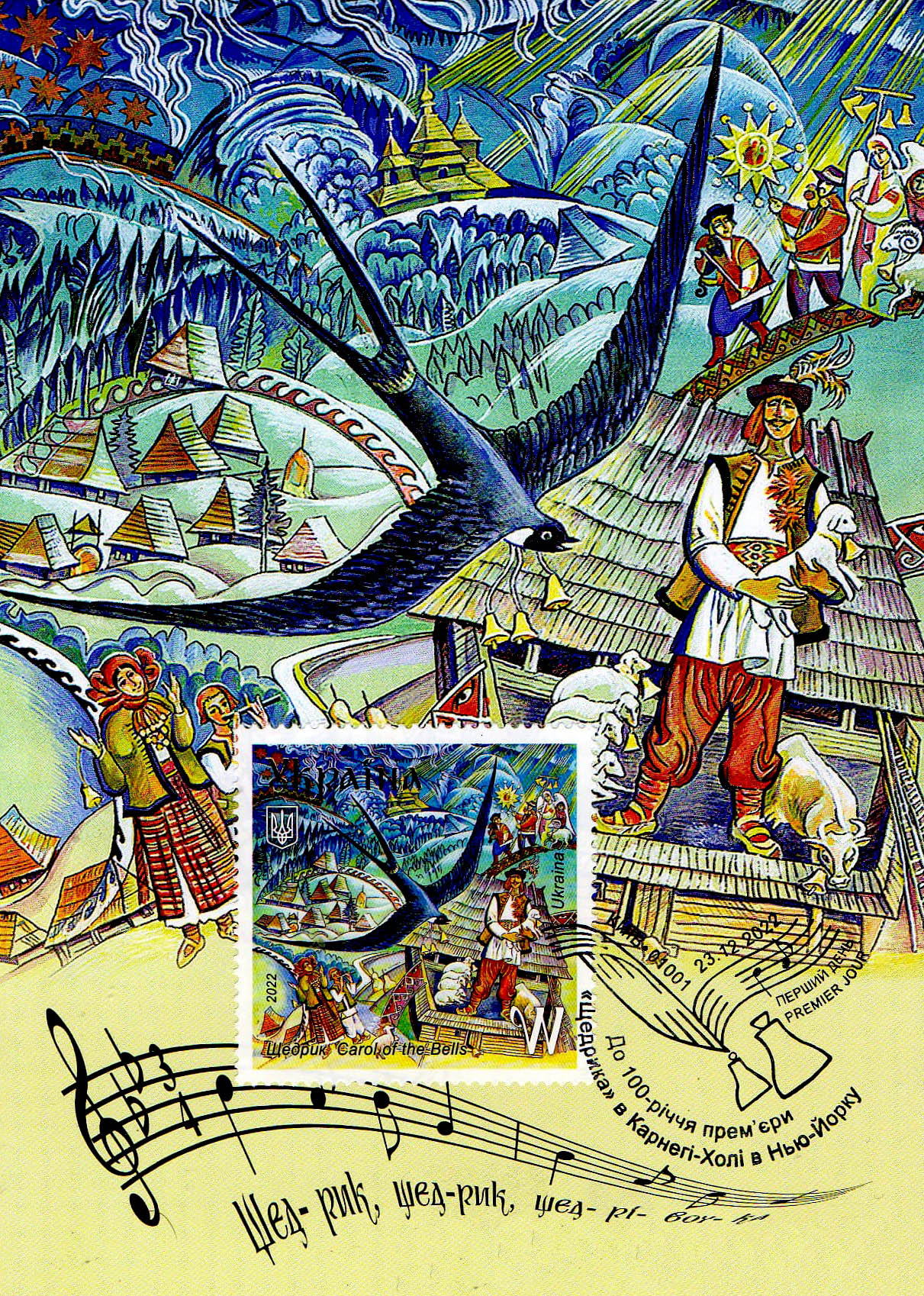
A clue to this calendrical shift is offered by the Christmas song, “Carol of the Bells,” which uses the melody of an old Ukrainian New Year;s carol, one which dates back to the era in which New Year was celebrated in March (hence the springtime imagery of its original Ukrainian lyrics).

Ukrainian postcard commemorating the folk song”Shchedryk” source of “Carol of the Bells”

After a brief look at the variable date chosen to celebrate the New Year throughout European history, we take some time to rethink our modern understanding of what constitutes the Christmas season.  The common notion that the season ends on December 25 or January 1, possibly including the weeks leading up to those dates, in historical understanding, was reversed, with Dec. 25 representing the start of Christmastide, which at the very least ran until Epiphany (Jan. 6) or Candlemas (Feb. 2).

The merger of Christmas and Carnival is not only aided by the historically later end date of Christmastide, but also the variable start date for Carnival. A number of regional dates preferred for those festivities are discussed with Germany’s initiation of festivities on November 11 being the earliest.

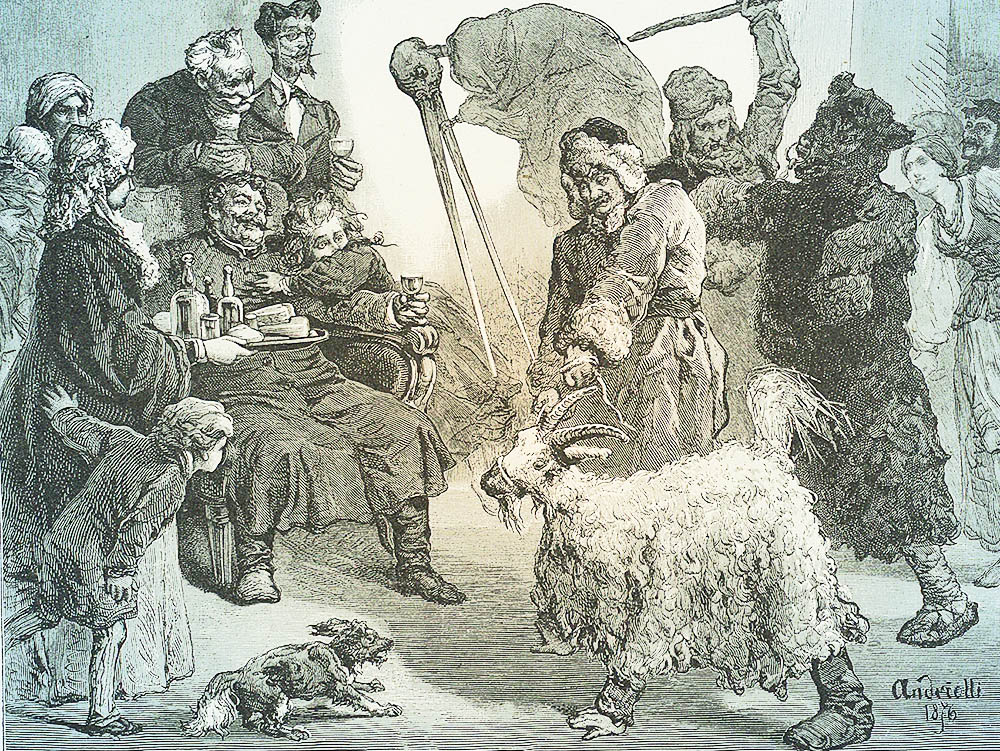
Another reason to suspect that Carnival inherited some of its customs from Carnival is the carnivalesque quality of the Christmas Feast of Fools celebrated anywhere from Dec. 26 to January 6.  The wild, and sometimes dangerous revels celebrated on those days (and discussed in Episode 100) were ended by local bishops at roughly the same time that Carnival celebrations in France and Germany emerged, suggesting  re-channeling of anarchic impulses and customs.

Our discussion then turns to the Roman New Year, the January Kalends, which likely inspired chaotic elements around the Feast of Fools. Of particular interest here are accounts of celebrants dressing in animal hides and horns. a custom that seems to have survived in certain Carnival traditions, including a number discussed in my Carnival book.  One of these, the Kurent of Slovenia, who happens to be rather similar to the Austrian Krampus across the country’s northern border.

In Western Bulgaria too, another Carnival figure, the Kuker, in western regions also makes  use of animal hides and horns (as well as bells).  Bulgaria also provides us with an interesting 20th-century case study of the merger of the traditions of Christmas (or “Surva,” the Bulgarian New Year) merging with springtime fertility customs of Carnival, both strands being associated with the Kuker.

We wrap up with a brief look at Slavic celebrations of the Christmas cycle as Koliade (various spellings), a name for Christmastide and the customs associated with it, particularly door-to-door “good luck visits” incorporating short plays and songs, kolyadka in Ukrainian, the original of “Carol of the Bells” (Shchedryk/”Bountiful Evening”) being one of these songs

“New Year’s Carols” (Kolędnicy noworoczni) from “A Polish Year in Life, Tradition and Song” (1900).

The sources for this show are Mr. Ridenour’s books The Krampus and the Old, Dark Christmas and A Season of Madness, Fools, Monsters, and Marvels of the Old-World Carnival.


Horror, Fact, Fiction, and a Revelation

Horror, Fact, Fiction, and a Revelation

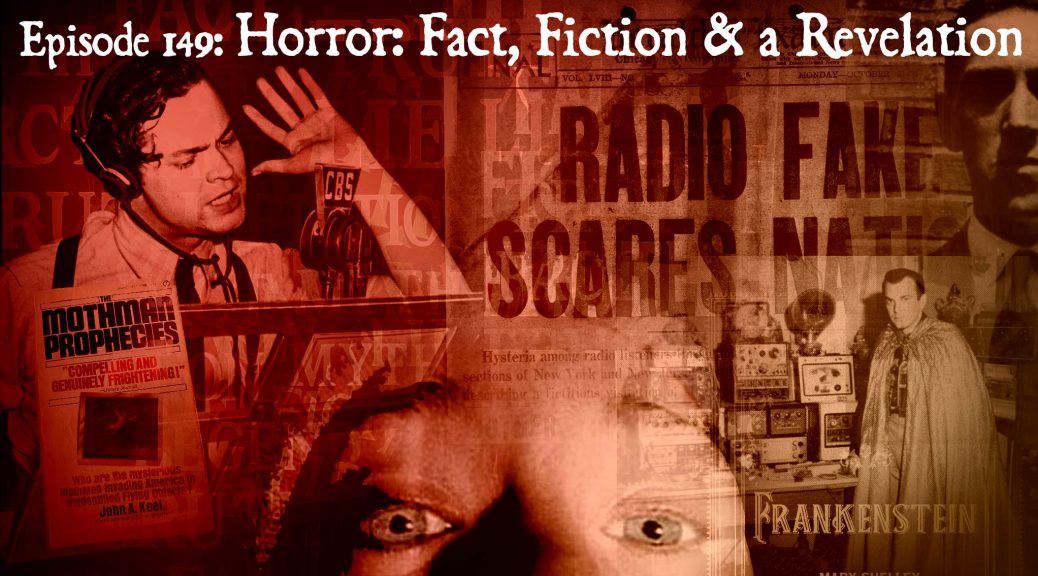
This is a special short episode looking at fictional evidence used to bolster horror narratives in literature, film, and broadcast media.  We compare the found-footage phenomenon with earlier literary techniques and discuss some famous hoaxes and Halloween pranks, some historical and others closer to home.

Pumpkins, Turnips, and Spooklights

Pumpkins, Turnips, and Spooklights

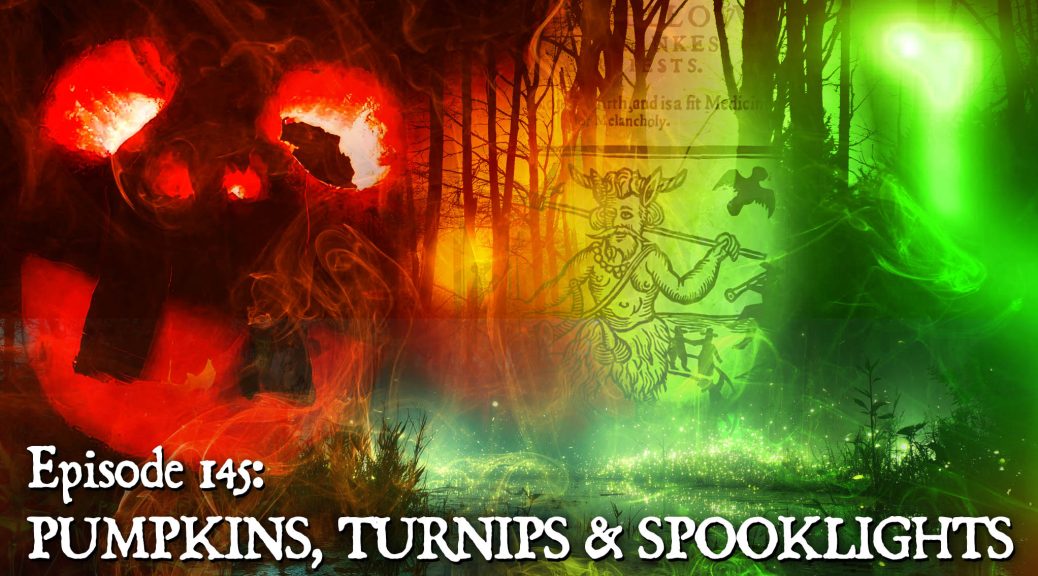
The Halloween Jack-o’-lantern, made from pumpkins in the US and originally turnips in the UK, began its existence as a wisp of glowing marsh gas or “spooklight.” We begin our episode with a montage of modern American spooklights including that of Oklahoma’s “Spooklight Road,” North Carolina’s Brown Mountain, and the flying saucers sighted in Michigan in 1966, famously identified by investigator Allen Hynek  as “swamp gas.”

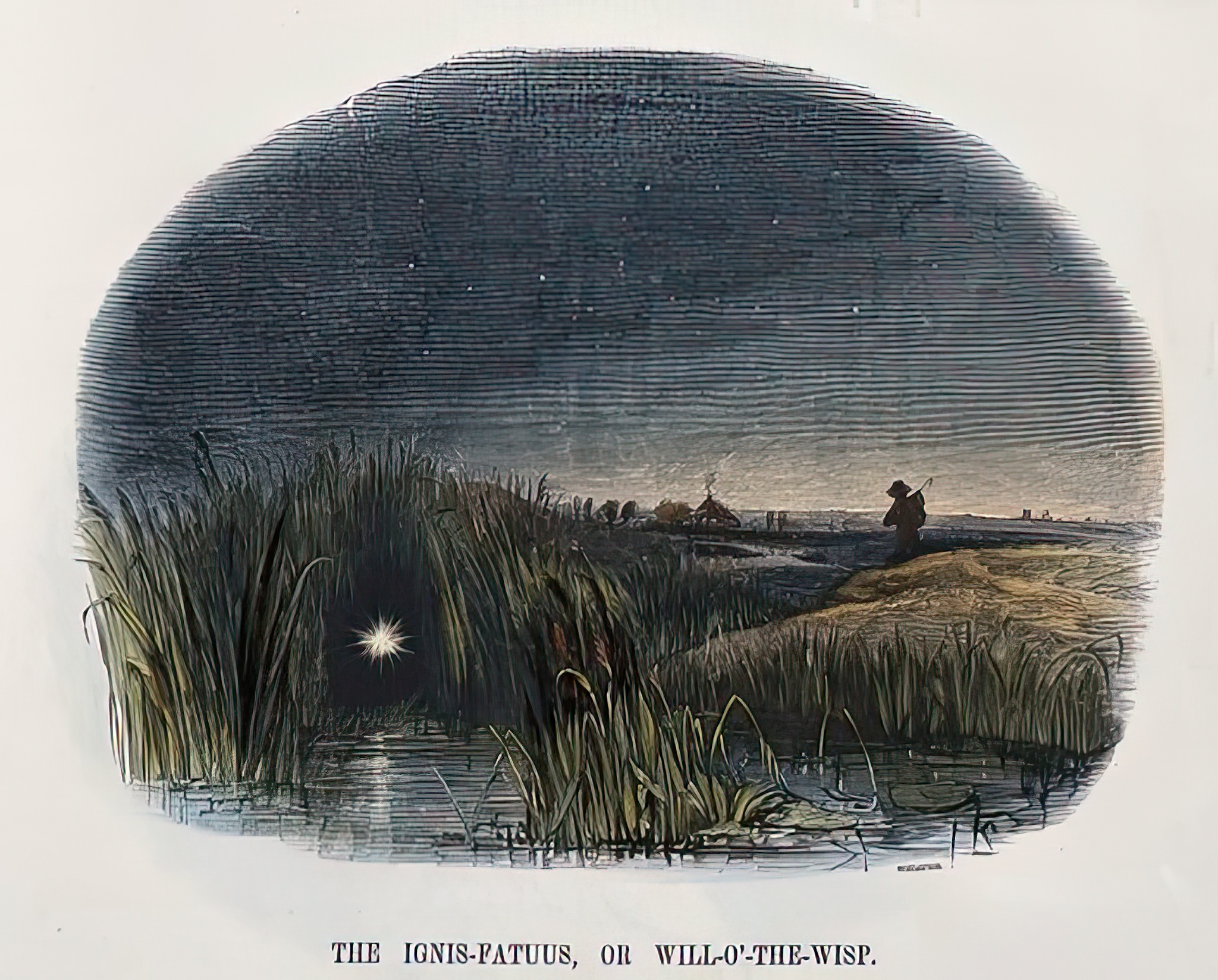
“Jack-o’-lantern”  was just another name given to what’s more widely known now as a Will-o’-the-wisp — a wavering, bobbing light seen in marshy places, understood as mischievous spirit intent on leading travelers off course and into their doom in muck and mire.  Flaming methane produced by rotting vegetation in such environments, is said to the the cause of the phenomenon, though the mode of ignition is still largely a matter of debate. The Latin name for such lights, ignis fatuus  (fool’s fire), was also applied to phenomena having nothing to do with swamps, as it’s been used interchangeably with “St. Elmo’s Fire” to describe electrical discharges seen on ships; masts and other rodlike protrusions when atmospheric conditions are right. We hear a dramatic first-person account from 1847, in which St. Elmo’s Fire (identified by antiquarian Henry Duncan as ignis fatuus) appears on a coachman’s whip during a storm.

A mirage in a marsh. Coloured wood engraving by C Whymper. Gas. Contributors: Charles H Whymper (1853–1941).

We then hear what scientists of the 16th and 17th century made of ignis fatuus, often relating it  unexpectedly to meteors or luminous insects, while mocking “the superstitions” who imagined it as wandering spirits alight with the flames of Purgatory.

Along with marsh spirits exlusively dedicated to misleading travelers, ignis fatuus could also be a temporary  form  taken by shapeshifting fairy folk like Puck or Robin Goodfellow.  We hear an example of this from  the 1628 pamphlet, Robin Goodfellow, his Mad Pranks and Merry Jests. We also see the term appearing in literature of the 16th and 17th century as a metaphor for treachery or deception, in works by John Milton and William Shakespeare.

We run through the variety of colorful regional names by which Will-o-the-Wisps were known: Bob-a-longs, Pinkets, Spunkies, Merry Dancers, Nimble men, Hinkypunks, and Flibberdigibbets, as well as some female variants including Peg-a-lantern and Kitty with the Candlestick. In Wales, these mysterious lights could be omens of death, also known as “corpse candles,” or “death lights.” Appearing around the home of the dying or at the deathbed, they were also called “fetch lights,” as they would arrive when required to fetch the soul to the other side. In Cornwall, fool’s fire is associated with the piskies, in particular Joan the Wad and her partner Jack-o’-the-Lantern, the former having acquired a mostly positive reputation in the 20th century as a luck-bringer. Mrs. Karswell also reads  some tales of ignis fatuus in the western counties, where the lights are called “hobby lanterns” (from hobgoblin) or  “lantern men.”

We then shift gears to discuss the pumpkin form of Jack-o’-lantern, beginning with a well-circulated Irish origin story. A quick summary: the light carried in a hollowed vegetable (a pumpkin in the New World or turnip in the Old) represents the spirit of a notorious sinner, “Jack,” or “Stingy Jack,” who upon death finds he is too wicked for Heaven and too troublesome for Hell. Consquently, he is condemned to wander the earth till Judgement Day, given the peculiar lantern to light his way.

This, at least, is the most recent version of the tale, but when it first appeared in print, in a 1936 edition of the Dublin Penny Journal, there’s no mention of any hollowed vegetable, much less of Halloween — meaning this “ancient legend” actually evolved as Halloween folklore in the second half of the 20th century.

We then do a bit more myth-busting on the other side of the Atlantic, checking in on Washington Irving’s Legend of Sleepy Hollow, which also turns out not to mention Halloween, nor a carved pumpkin representing the Horseman’s head.  When hollowed pumpkins first are mentioned by the 1840s, they are associated with Thanksgiving rather than Halloween, as in John Greenleaf Whittier’s 1947 poem, “The Pumpkin.”  The next  appearance of a Jack-o’-lantern, in an 1860 edition of a Wisconsin newspaper, is also not associated with Halloween but with an impromptu parade supporting Abraham Lincoln’s presidential run.  It seems that it was only by the end of the 19th century that the hollowed, lighted pumpkin was linked with Halloween, while retaining associations with Thanksgiving into the early 1900s.

In the UK, hollowed and lighted turnips (occasionally beets or rutabagas) seem to have been around since the early 1800s. Originally, they’re not necessarily associated with Halloween specifically but as something created by mischievous boys eager to scare their neighbors whenever the vegetables became available for such hijinks. A Scottish source, John Jamieson’s An Etymological Dictionary of the Scottish Language 1808), is the first to link them to Halloween pranks, and by the 1890s, we hear of lighted turnips being carried by costumed children (“guisers”) celebrating Halloween in Scotland.

Carved turnip used on the Isle of Man. Courtesy www.culturevannin.im

We then discuss the Jack-o’-lantern’s British evolution, namely, the replacement of  the turnip with the American pumpkin, beginning with their importation in the 1950s.  The process was slow, with both carved turnips and pumpkins used side-by-side in some regions, and the use of carved turnips longer retained in some regions.  Of particular interest here is the Isle of Man, where the Halloween celebration of Hop-tu-naa makes exclusive use of turnip lanterns in costumed door-to-door rounds during which children sing a largely nonsensical song punctuated by the rhyming syllables “Hop-tu-naa.”  An audio snippet of the song is provided courtesy of the Manx organzation Culture Vannin (https://culturevannin.im/).

We wrap up  with some speculations regarding the disappearance of the Will-o-the-Wisp and its evolution through different forms, including the glowing swamp gas theorized to have inspired the 1966 Michigan saucer sightings (and our closing song by Lewis Ashmore and the Space Walkers!)

The Fates

The Fates

The Fates of Classical Antiquity not only survived in the form of related fairy-tale figures but also as the object of superstitions and rituals associated with newborns. In South Slavic and Balkan regions particularly, these customs represent a surprisingly long-lived and genuine case of pagan survival.

We begin our episode examining the fairy godmothers of “Sleeping Beauty” as embodiments of the Fates.  Mrs. Karswell reads a few key passages from the definitive version of the story included in Charles Perrault’s 1697 collection, Histoires ou contes du temps passé (“stories of times gone by.”) We learn how the fairies fulfill the historical role of godparents at the newborn’s christening. We also note the peculiar emphasis on the quality of what’s set before the fairies at the christening banquet, observing how a failure there leads the wicked fairy to curse the Sleeping Beauty.

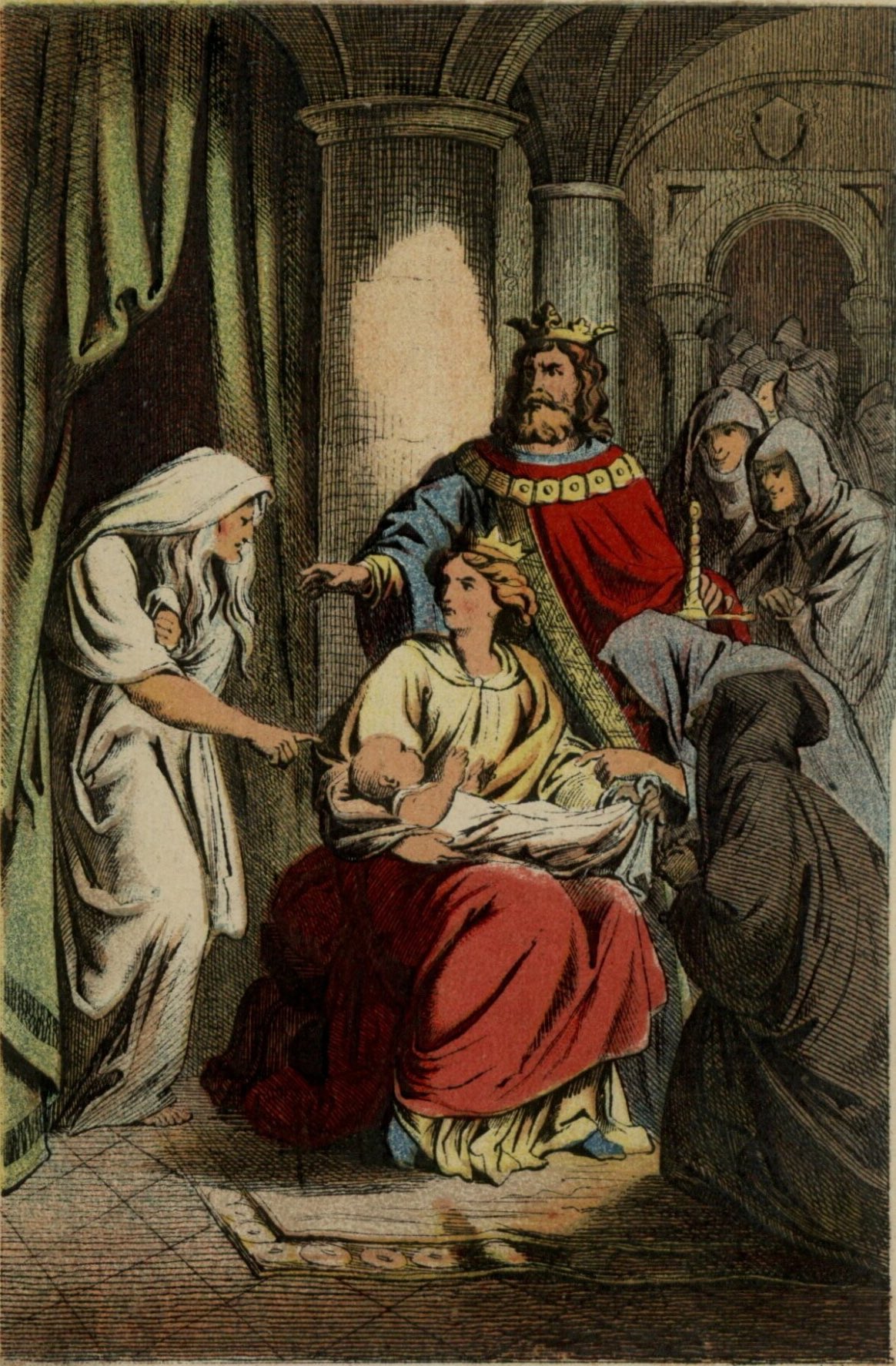
Czech illustration
1874 illustration by František Doucha for a Czech edition of Sleeping Beauty

We then explore antecedents to Perrault’s tale, beginning with the 14th-century French chivalric romance, Perceforest.  A peripheral story in this 8-volume work is that of Troylus and Zeelandine, in which the role of Sleeping Beauty’s fairy godmothers are played by Greek and Roman deities, with Venus as supporter of Princess Zeelandine (and her suitor Troylus) and Themis cursing Zeelandine to sleep in a manner similar to Perrault’s princess.  A failure to correctly lay out Themis’ required items at the christening banquet is again again responsible for the curse, though the awakening of Zeelandine by Troylus awakens is surprisingly different and a notorious example of medieval bawdiness.

Preceding Perceforest, there was the late 13th-century French historical romance Huon of Bordeaux, in which we hear of the newborn fairy king Oberon being both cursed and blessed by fairies attending his birth.  From around the same time, French poet and composer Adam de la Halle’s Play of the Bower describes a banquet at which fairy guests pronounce a curses and blessings on those in attendance prompted again by their pleasure or displeasure at what’s set before them at a banquet. We also  hear of the Danish King King Fridlevus (Fridlef II) bringing his newborn son to a temple of “three maidens” to ascertain the  destiny pf the child in Gesta Danorum (“Deeds of the Danes”).written around 1200 by Saxo Grammaticus. And lest listeners think such appeals to the Fates were strictly a literary motif, we hear Burchard of Worms, in his early-11th-century Decretum, condemning the not uncommon among the Germans of his region of setting up offering tables for the Fates.  By this point, the connection between how fairy godmother types are served at a banquet and offerings made to the Fates to ensure a cild’s fortune should be clear.

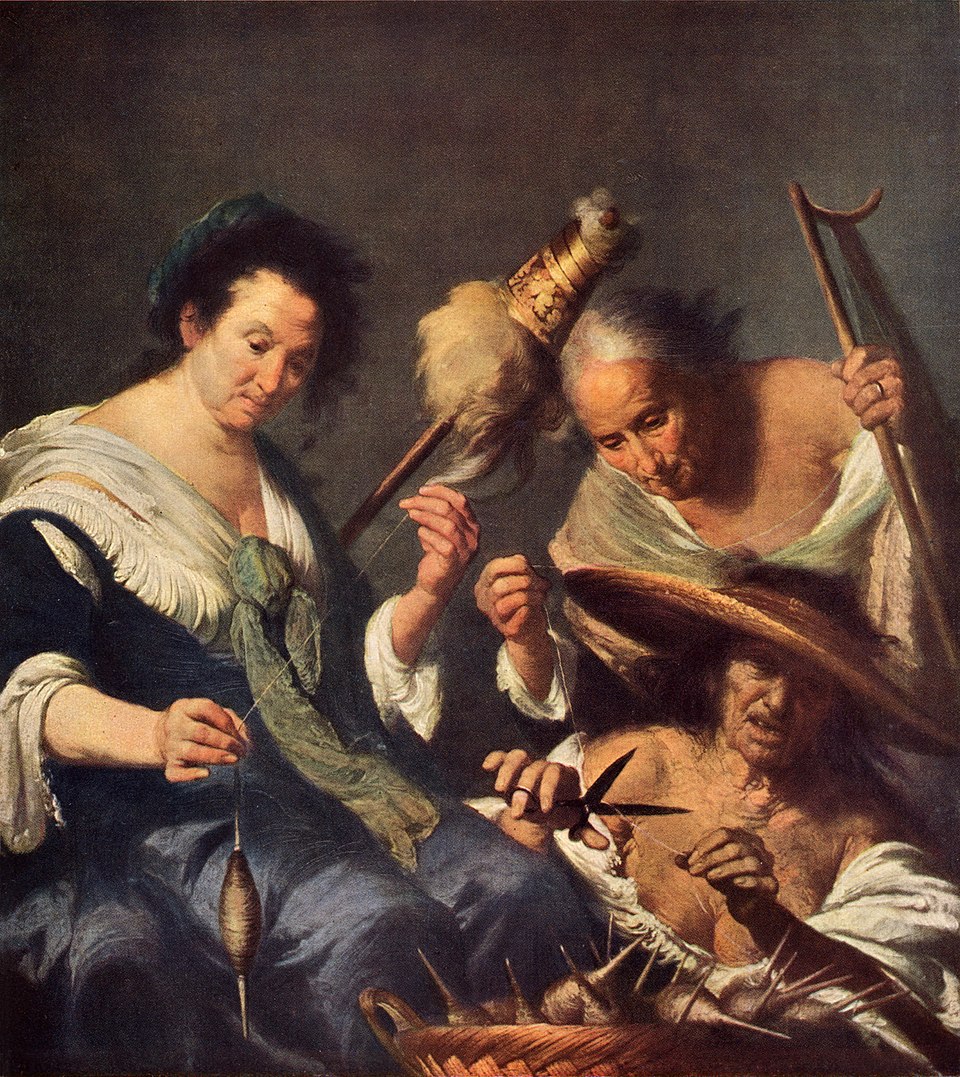
We then turn back to the Greek Fates, the Moirai (Clotho, Lachesis, and Atropos) and the Roman Parcae (Nona, Decuma, and Morta). Particularly in the case of the Parcae, we hear examples of their connection to the newborn’s destiny in the celebration nine or ten days after the birth of the dies lustricus, during which offerings were made to the Fates.

The Three Fates by Bernardo Strozzi, late 17th c

We make a brief side-trip to discuss the Norns (Urðr, Verðandi and Skuld), the Germanic equivalent of the Fates.  These are more distant cousins, not strongly associated with the newborn and his destiny, though we do hear a passage from the Poetic Edda, in which the Norns are  present birth of the hero Helgi. We also hear a gruesome passage from the 13th-century Njáls Saga, in which the Valkyries weave out the fate of those who will die in the Battle of Clontarf.

The Anglo-Saxon equivalent of the Fates, the Wyrds, are also discussed, and we hear how the  witches in Macbeth partook in this identity as the “Weird Sisters,” an association Shakespeare inherited from his source material, the 1587 history of Great Britain, known as Holinshed’s Chronicles.

We then turn our attention the Fates in Slavic and Balkan lands — the Rozhanitsy in  Russia and Ukraine, the Sudičky among West Slavs, the Orisnici in Bulgaria, and the Ursitoare in Romania. As these customs survived into more recent times, there is a vast body of folklore to describe —  much of it revolving around the setting up of offering tables and the communication of newborn’s destiny through dreams sent to mothers and midwives and confirmed by  marks (visible or invisible)  left upon the infant during their nocturnal visits on the third night after birth.

We also enjoy a couple entertaining folktales about Romania’s Ursitoare collected in the early years of the 20th century by folklorist Tudor Pamfile.

While such customs have since died out in Greece, customs related to the Moirai preserved into the early 20th century, as we hear in passages  of John Lawson’s Modern Greek Folklore and Ancient Greek Religion: A Study in Survivals, written in 1900.

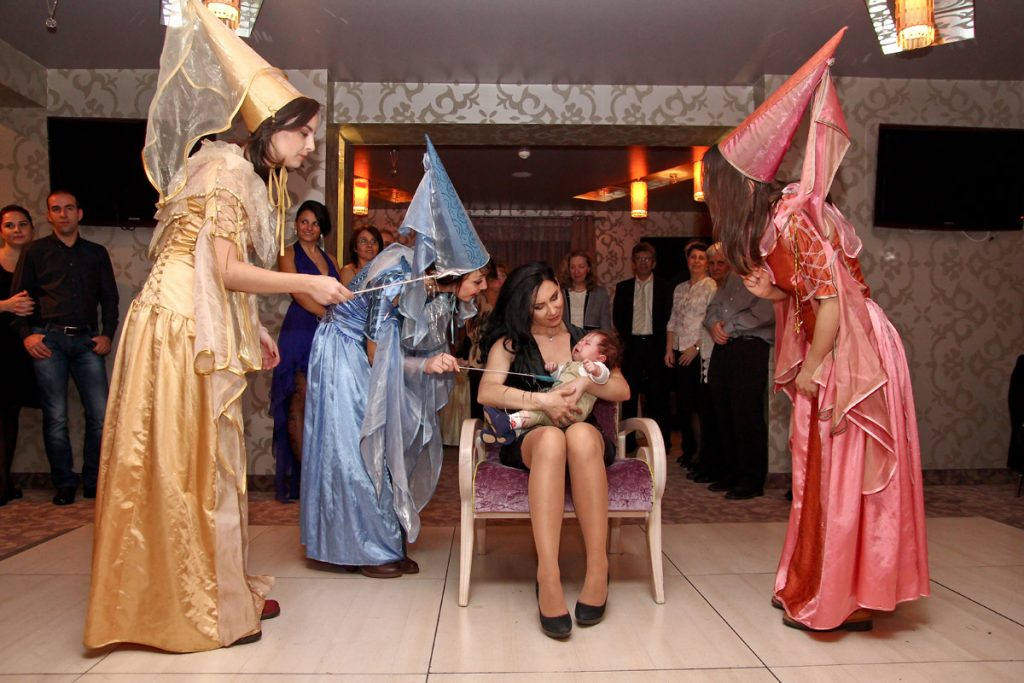
We end with a brief look at christening parties in modern Romania, at which costumed Ursitoare play an increasingly major role, this paired with an introduction to the popular song  “Ursitoare, Ursitoare.”

Romanian Fates attend a christening party. Ursitoare show by FormatiiNunta
Rolling Hells and Land-Ships

Rolling Hells and Land-Ships

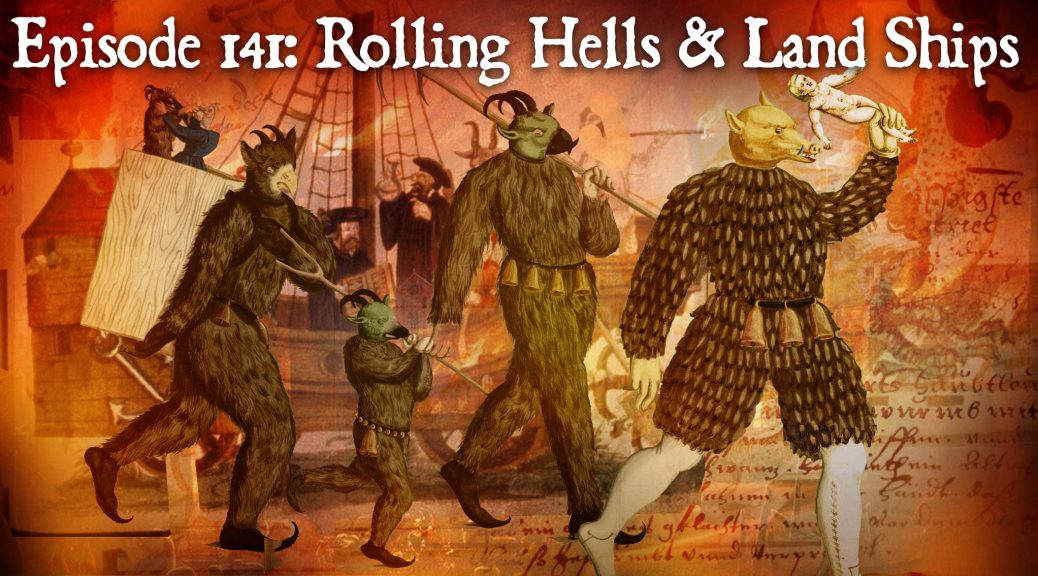
During the 15th-century, citizens of Nuremberg, Germany, experienced spectacular Carnival parades highlighted by the appearance of floats known as “hells.”  Featuring immense figures, including dragons, ogres, and man-eating  giants, these hells were also peopled with costumed performers and enhanced with mechanized effects and pyrotechnics.

In this episode, adapted from a chapter of Mr. Ridenour’s new book, A Season of Madness: Fools, Monsters and Marvels of the Old-World Carnival, we examine the Nuremberg parade, the Schembartlauf, as it evolves from costumed dance performances staged by the local Butcher’s Guild in the mid-1 4th-century into a procession of fantastic and elaborately costumed figures, and finally — in 1475 – into a showcase for the rolling hells.

We begin, however, with an examination of a historical anecdotes sometimes presented as forerunners of  the Carnival parades, and of the Schembartlauf in particular, including two sometimes put forward to support a “pagan survival” theory.  The first involves a ceremonial wagon housing a figure of the putative fertility goddess, Nerthus, hauled about by Germanic peoples in the first century and mentioned in Tacitus’ Germania.  The second, also involving a wagon with fertility figure, is described by Gregory of Tours as being hauled through farmers’ fields in the 6th-century.

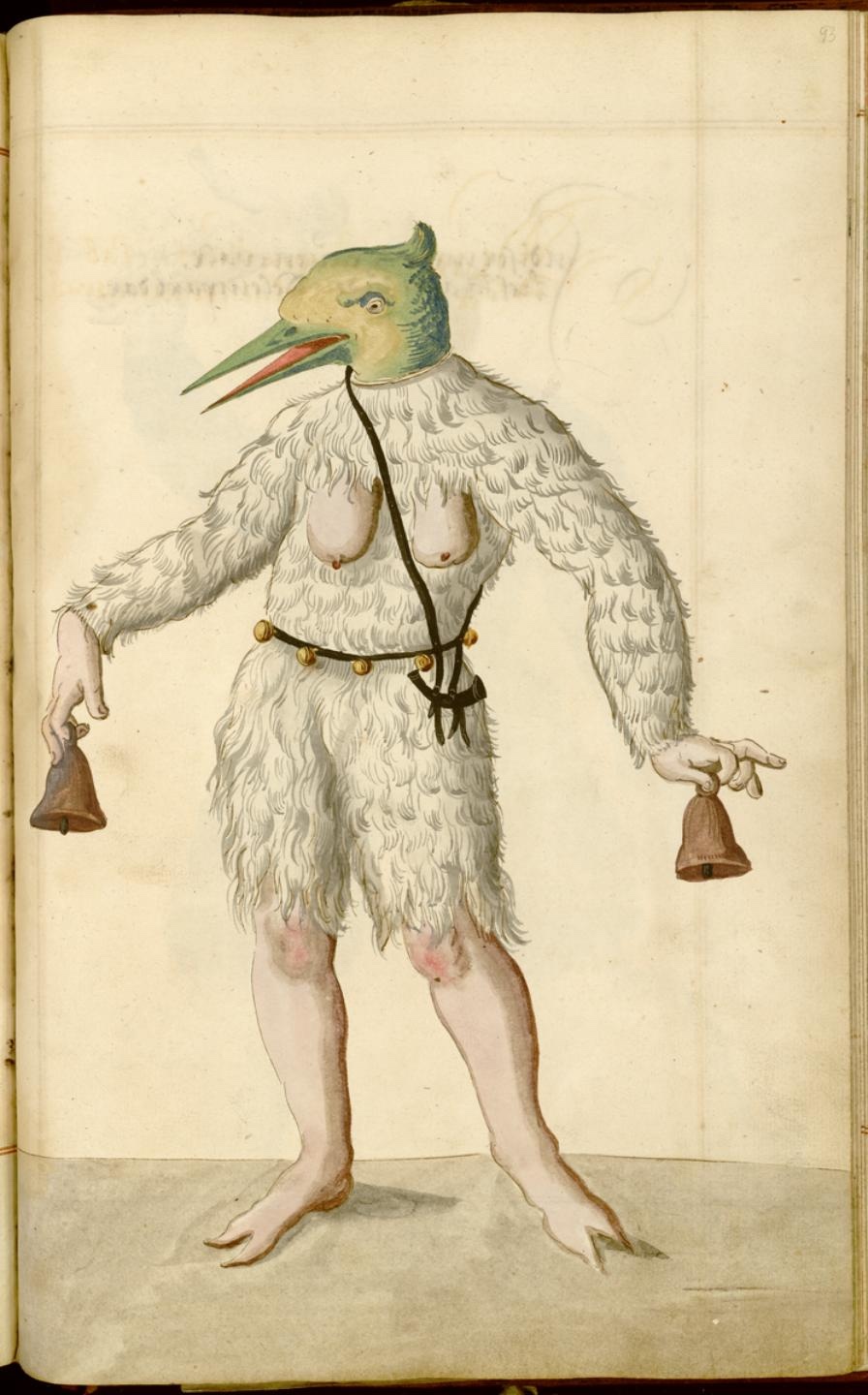
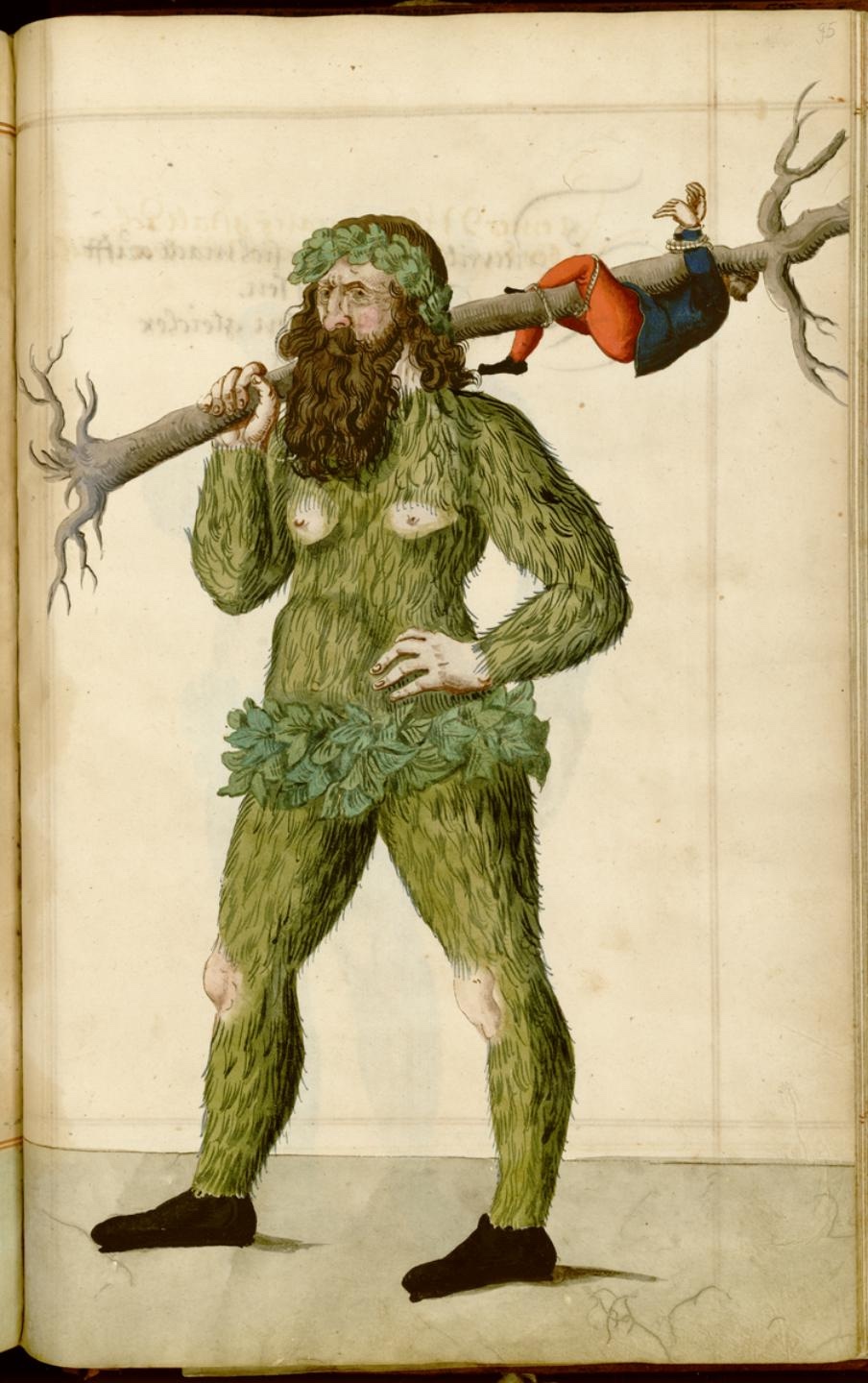
Period illustration of costumed figure from a Schembartbuch.

A third case involves the mysterious “land-ship,” a full-scale wheeled ship hauled from Germany into Belgium, and the Netherlands in 1135. Mentioned exclusively by the Flemish abbot, composer, and chronicler Rudolf of St. Trond in his Gesta Abbatum Trudonensium (Deeds of the Abbots of Trond), it’s characterized by the abbot as a sort of pagan temple on wheels and locus of orgiastic behavior, the precise purpose and nature of this peculiar incident remains largely a mystery.

We then hear a comic incident imagined in the early 13th-century story of the knight Parzival as told by Wolfram von Eschenbach. By way of analogy to the character’s ludicrous behavior, Carnival is mentioned for the first time, or more specifically von Eschenbach use the German word for Carnival, specifically the Carnival of Germany’s southwest called “Fastnacht.”

Our story of the Schembartlauf concludes the show with a description of its ironic downfall through local intrigues fired by the Protestant Reformation. Worth mentioning also, in our Schembart segment, is the heated scholarly debate around objects depicted in period illustrations, which look for all the world like oversized pyrotechnic artichokes.

New Patreon rewards related to Mr. Ridenour’s Carnival book are also announced in this episode, along with related Carnival-themed merch in our Etsy shop, including our “Party Like it’s 1598” shirts featuring Schembart figures.

Book Trailer

Book Trailer

Here’s a new book trailer I put together for A Season of Madness: Fools, Monsters, and Marvels of the Old-World Carnival.  This one’s slanted toward who may have been interested in my Krampus book.  The book is available in the US at better bookstores, Amazon, Barnes and Noble, directly from the publisher, Feral House,  and via other online booksellers.

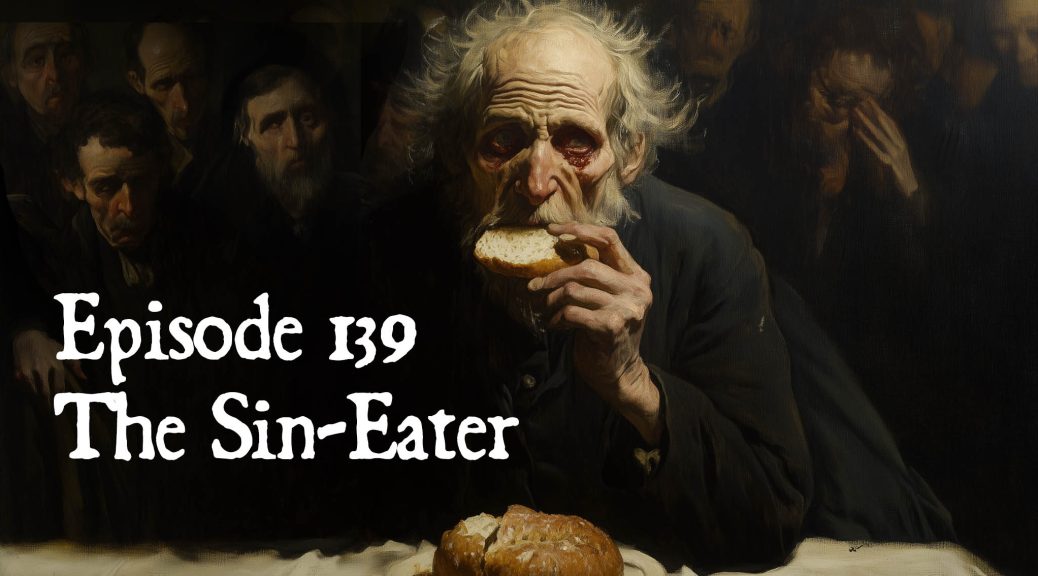
The Sin-Eater

The Sin-Eater

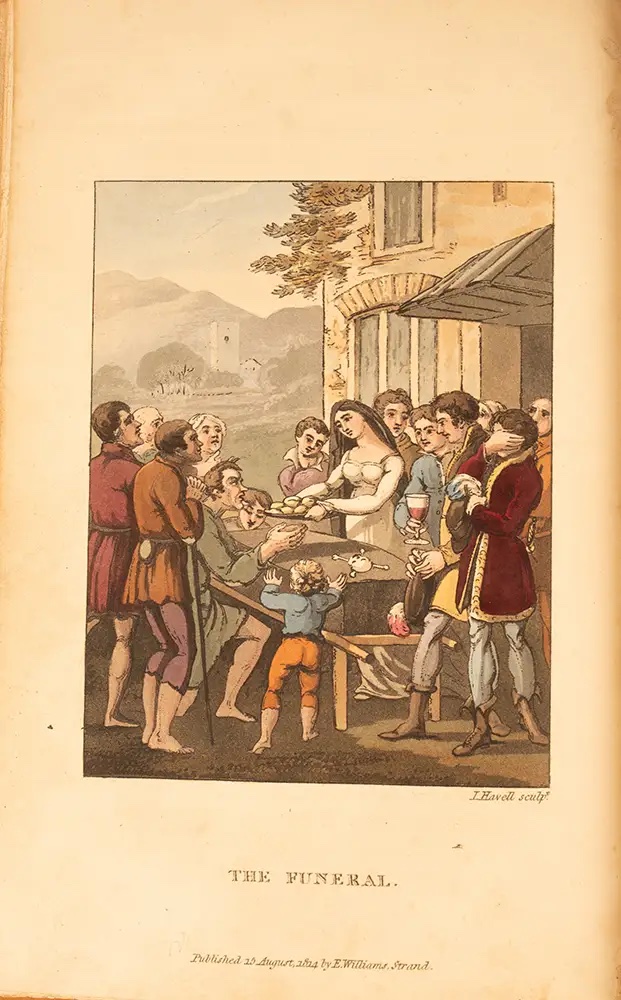
The Sin-Eater was a figure associated with funerals of the 17th – 19th century, mostly in Wales, and the English counties along the Welsh border. According to tradition,  he was invited by grieving families to transfer the burden of sins from the deceased to himself by consuming bread and  beer in the vicinity of the corpse, after which he might receive some financial compensation. He typically came from the fringes of society and was said to be motivated by a combination of poverty, greed, and irreligious indifference to matters of eternal judgement.

After a quick montage of clips from the generally terrible films made on the theme —Sin Eater (2022), Curse of the Sin Eater (2024), The Last Sin Eater (2007) — we review  the historical references to the tradition, which are surprisingly few in number.

The first comes from a particularly early 1686 collection of British folklore written by John Aubrey, The Remaines of Gentilisme and Judaisme.  His characterization of the custom  is essentially that described above and despite the early date of the text, he describes the practice using the past tense, though qualifies this somewhat later mentioning that it is “rarely used in our days.”  Mrs. Karswell, of course, reads Aubrey’s original text along with our subsequent examples.

Our next account from 1715 comes from antiquarian John Bagford (published later, in 1776) in  John Lelan’s, compendium, Collectanea. It does not mention Wales but locates the custom in Shropshire, an English county bordering Wales.  It also has the Sin-Eater remaining outside the house where the body lies as he consumes his bread and ale.  Bagford also adds a verbal formula, which the Sin-Eater is supposed to pronounce, mentioning the deceased’s soul attaning  “ease and rest,” for which the Sin-Eater’s soul has been “pawned.” These phrases are recycled in later literature on the topic.

The next text comes from 1838, appearing in the travelogue Hill And Valley: Or Hours In England And Wales by the Scottish novelist, Catherine Sinclair. It’s particularly brief, adding little detail other than specifying the tradition as one (formerly) belonging to Monmouthshire, in eastern Wales.  She also characterizes the custom derisively as “popish,” or belonging to the Catholic past.

The next and final account (not counting clearly recycled retellings of those above) was contributed by Matthew Moggridge in an 1838 journal of the Cambrian Archaeological Association.  It also relegates the tradition to the past, placing it specifically in the Welsh town of f Llandybie. Moggridge removes the ale, keeps the bread, and
adds salt (used symbolically rather eaten). He also makes explicit the Sin-Eater’s pariah status.

Aubrey’s, Bagford’s, an Moggridge’s accounts received greater attention when collected in an 1892 article by  E. Sidney Hartland in the journal Folk-Lore, the publication of the British Folk-Lore Society. Hartland’s “rediscovery” of these texts fueled the interest of the British public and corresponded with a rising fascination in such things as represented in the arts by the Celtic Revival instigated by William Butler Yeats’  1893 work, The Celtic Twilight and the ongoing publication between 1890 and 1915 of James Frazer’s evolving work on folklore, The Golden Bough.

As there are no firsthand accounts describing sin-eating as a custom still in existence a misinterpretation or garbled accounting of another tradition may lie behind the concept of the Sin-Eater. The second half of our show examines the extent to which creative myth-making formed the concept along with the role older Catholic practices may have contributed to the tales.

The earliest literary Sin-Eater we encounter appears in a chapter of Joseph Downes’ 1836 novel, The Mountain Decameron.  Mrs. Karswell reads an evocative passage or two describing a traveler stumbling into a scene of sin-eating while traveling through a haunted bog.  Along with several other quick summaries of post-Hartland novels treating the topic, we hear a sin-eater clip from a BBC adaptation of Mary Webb’s 1924 novel, Precious Bane and learn how  Christanna Brand’s 1939 short story “The Sins of the Fathers,” ended up in an episode of Rod Serling’s 1970s TV series, Night Gallery.

We then survey a number of transactional funeral customs possibly reinterpreted as Sin-Eater lore, among these: “funeral doles” and “avral feasts” at which property of the deceased was disbursed, unsavory pallbearers paid off in food and drink, and the distribution of “soul-cakes “and the custom of “souling” to assure the deceased’s heavenward ascent. Best of all, we learn  about that cousin to the soul-cake — the funeral cookie.

Illustration of Sin-Eating from The Cambrian Popular Antiquities (1815)