This is a special short episode looking at fictional evidence used to bolster horror narratives in literature, film, and broadcast media. We compare the found-footage phenomenon with earlier literary techniques and discuss some famous hoaxes and Halloween pranks, some historical and others closer to home.
The Sin-Eater was a figure associated with funerals of the 17th – 19th century, mostly in Wales, and the English counties along the Welsh border. According to tradition, he was invited by grieving families to transfer the burden of sins from the deceased to himself by consuming bread and beer in the vicinity of the corpse, after which he might receive some financial compensation. He typically came from the fringes of society and was said to be motivated by a combination of poverty, greed, and irreligious indifference to matters of eternal judgement.
After a quick montage of clips from the generally terrible films made on the theme —Sin Eater (2022), Curse of the Sin Eater (2024), The Last Sin Eater (2007) — we review the historical references to the tradition, which are surprisingly few in number.
The first comes from a particularly early 1686 collection of British folklore written by John Aubrey, The Remaines of Gentilisme and Judaisme. His characterization of the custom is essentially that described above and despite the early date of the text, he describes the practice using the past tense, though qualifies this somewhat later mentioning that it is “rarely used in our days.” Mrs. Karswell, of course, reads Aubrey’s original text along with our subsequent examples.
Our next account from 1715 comes from antiquarian John Bagford (published later, in 1776) in John Lelan’s, compendium, Collectanea. It does not mention Wales but locates the custom in Shropshire, an English county bordering Wales. It also has the Sin-Eater remaining outside the house where the body lies as he consumes his bread and ale. Bagford also adds a verbal formula, which the Sin-Eater is supposed to pronounce, mentioning the deceased’s soul attaning “ease and rest,” for which the Sin-Eater’s soul has been “pawned.” These phrases are recycled in later literature on the topic.
The next text comes from 1838, appearing in the travelogue Hill And Valley: Or Hours In England And Wales by the Scottish novelist, Catherine Sinclair. It’s particularly brief, adding little detail other than specifying the tradition as one (formerly) belonging to Monmouthshire, in eastern Wales. She also characterizes the custom derisively as “popish,” or belonging to the Catholic past.
The next and final account (not counting clearly recycled retellings of those above) was contributed by Matthew Moggridge in an 1838 journal of the Cambrian Archaeological Association. It also relegates the tradition to the past, placing it specifically in the Welsh town of f Llandybie. Moggridge removes the ale, keeps the bread, and
adds salt (used symbolically rather eaten). He also makes explicit the Sin-Eater’s pariah status.
Aubrey’s, Bagford’s, an Moggridge’s accounts received greater attention when collected in an 1892 article by E. Sidney Hartland in the journal Folk-Lore, the publication of the British Folk-Lore Society. Hartland’s “rediscovery” of these texts fueled the interest of the British public and corresponded with a rising fascination in such things as represented in the arts by the Celtic Revival instigated by William Butler Yeats’ 1893 work, The Celtic Twilight and the ongoing publication between 1890 and 1915 of James Frazer’s evolving work on folklore, The Golden Bough.
As there are no firsthand accounts describing sin-eating as a custom still in existence a misinterpretation or garbled accounting of another tradition may lie behind the concept of the Sin-Eater. The second half of our show examines the extent to which creative myth-making formed the concept along with the role older Catholic practices may have contributed to the tales.
The earliest literary Sin-Eater we encounter appears in a chapter of Joseph Downes’ 1836 novel, The Mountain Decameron. Mrs. Karswell reads an evocative passage or two describing a traveler stumbling into a scene of sin-eating while traveling through a haunted bog. Along with several other quick summaries of post-Hartland novels treating the topic, we hear a sin-eater clip from a BBC adaptation of Mary Webb’s 1924 novel, Precious Bane and learn how Christanna Brand’s 1939 short story “The Sins of the Fathers,” ended up in an episode of Rod Serling’s 1970s TV series, Night Gallery.
We then survey a number of transactional funeral customs possibly reinterpreted as Sin-Eater lore, among these: “funeral doles” and “avral feasts” at which property of the deceased was disbursed, unsavory pallbearers paid off in food and drink, and the distribution of “soul-cakes “and the custom of “souling” to assure the deceased’s heavenward ascent. Best of all, we learn about that cousin to the soul-cake — the funeral cookie.
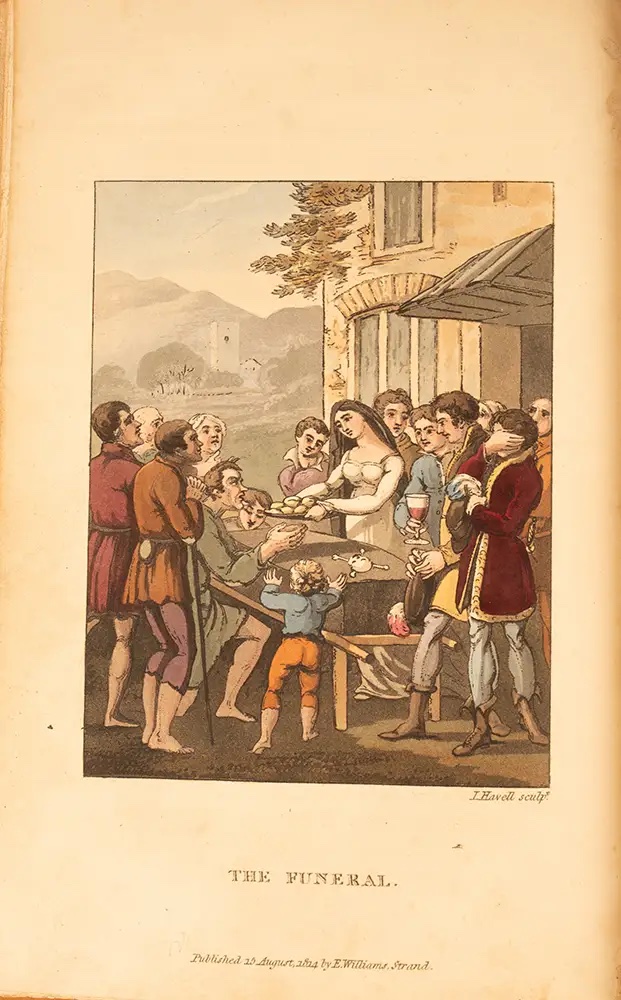
Illustration of Sin-Eating from The Cambrian Popular Antiquities (1815)
The story of Snow White, as told by the Brothers Grimm, is only one of many narratives involving girls who have fallen into a deathlike state and are displayed in a glass coffins. In this episode, we examine the sordid details of the Grimm’s original 1812 version of the tale and compare it with analogous stories dating back to the 12th century.
We begin with a review of the Grimms’ original story, many aspects of which have been subsequently muddled and obscured not only by Disney but by later alterations made by the Grimms. These include the identify of the Evil Queen, the malevolence of her intent, the purported benevolence of the Huntsman, and particularly, the nature of Snow White’s resurrection.
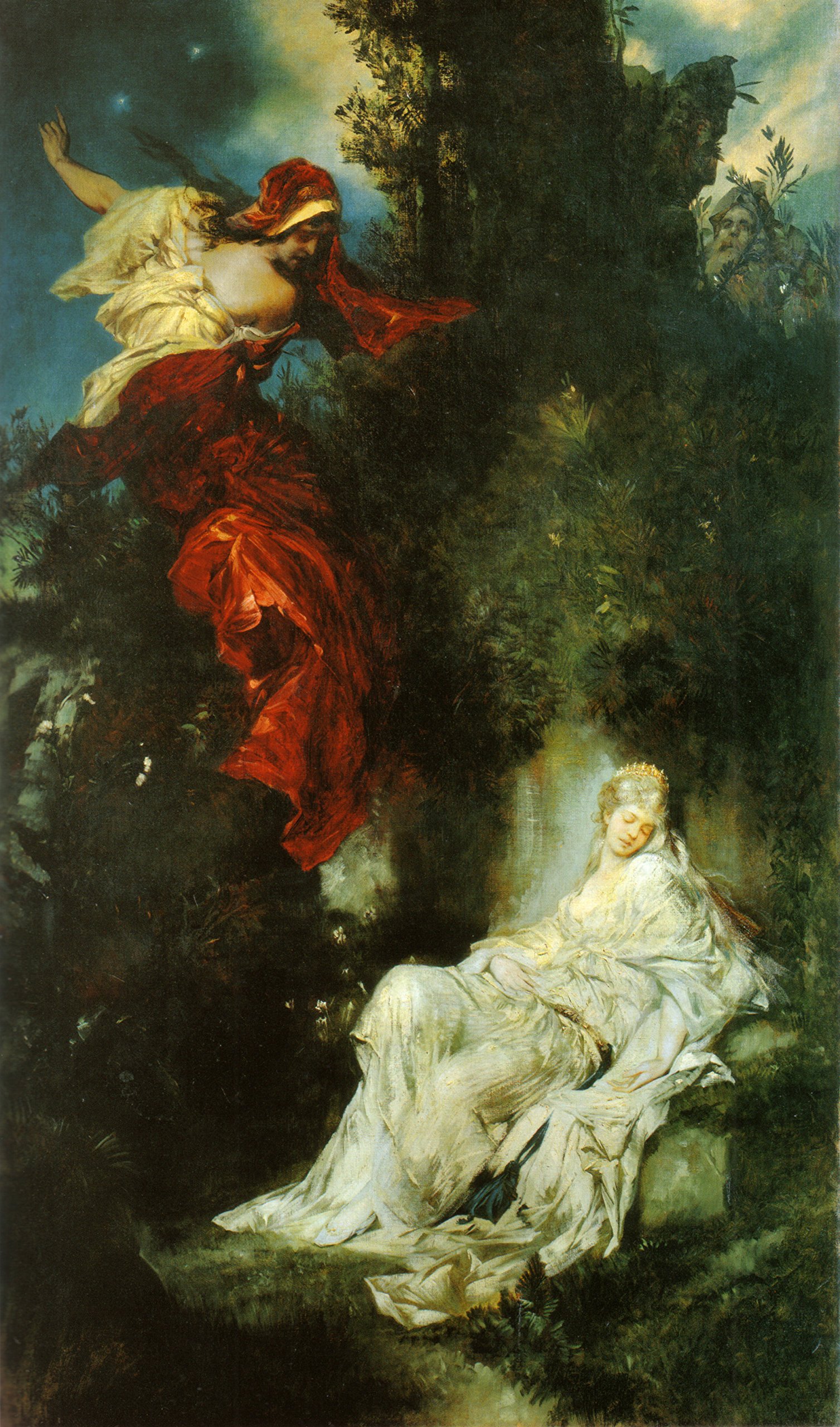
“Snow White Receives the Poisoned Comb” Hans Makart (1872)
After this, we have a look at the immediate predecessor to the 1812 story, a children’s play of the same name by the (unrelated) German author Albert Ludwig Grimm. Though it features dwarves who aid Snow White, a magic mirror addressed in rhyme, poisoned fruit, deception involving the heroine’s purported death, and glass coffin, it proves to be a very different story.
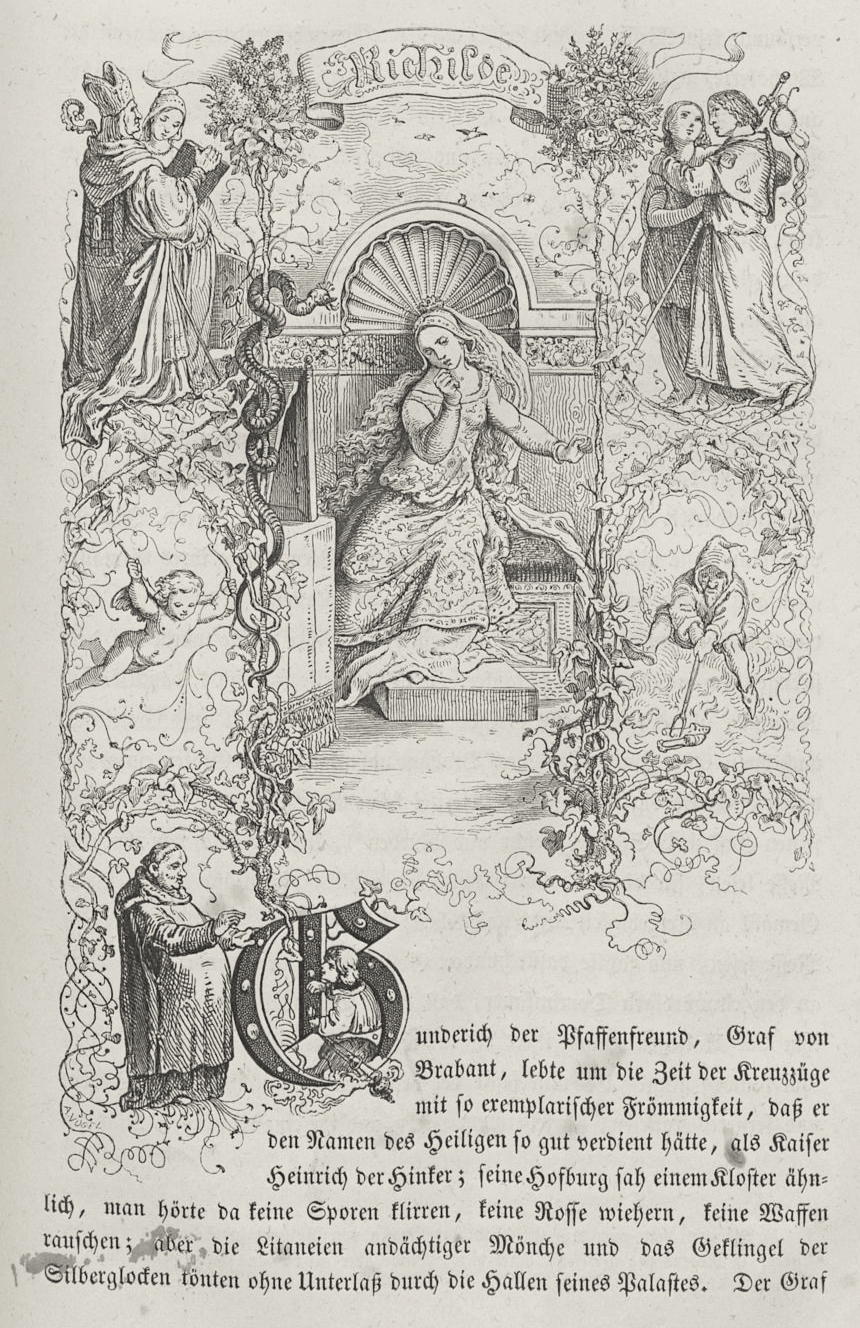
The next tale explored is the 1782 novella Richilde, by the German writer Johann Karl August Musäus. Surprisingly, the title character here, Richilde, is the wicked stepmother rather than her step-daughter Bianca, whose name in Italian (i.e., “white”) might be compared to “Snow White.” Set in medieval Brabant (Belgium), this one has Bianca courted by a prince whom the jealous stepmother hopes to see married to her own daughter. A further complication is presented by the fact that the prince here is already married.
Richilde Title Page
We then take a look at the rarely mentioned Russian story, “The Tale of the Old Mendicants,” (my translation) published in the 1794 collection, An Old Song in a New Setting, or a Complete Collection of Ancient Folk Tales, Published for a lover of them, at the expense of the Moscow merchant Ivan Ivanov (my translation). In this one, the role of the Evil Queen is played by an innkeeper jealous that her guests have complimented the beauty of her daughter rather than her own. The alms-collecting monks of the title are used by the mother to deliver a poisoned shirt to the Snow White character, Olga the Beautiful.
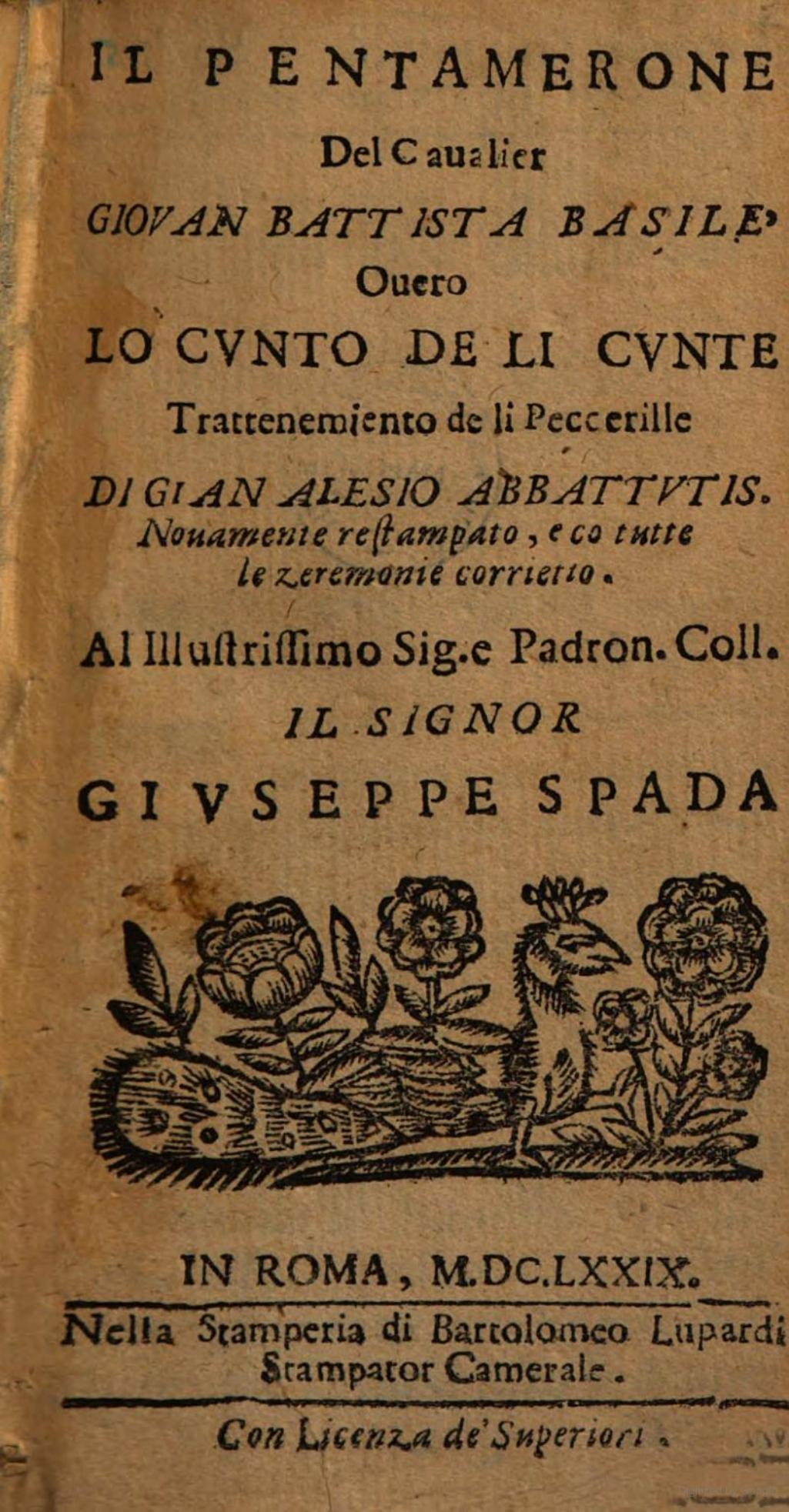
Our next offering comes from the 1634 volume by Neapolitan writer Giambattista Basile, Il Pentamerone, or The Tale of Tales, the very first collection of fairy tales, with which the Brother Grimm were definitely familiar (and one featured in our earlier “Dark Fairy Tales” episodes, both One and Two ). The story in question is “The Little Slave,” which combines elements of Snow White, Sleeping Beauty, and Cinderella. Here, the Snow White character, Lisa, again falls into a death-like swoon and is kept within not one but seven glass coffins in a locked room. The story resolves itself with the aid of a doll, a whetstone, and a knife.
Il Pentamarone
Our earliest story paralleling Snow White, is quite a bit older — from the 12th-century, the Lai of Eliduc by Breton writer Marie de France. While serving a king in England, the Breton knight Eliduc falls in love with his lord’s daughter, Guillardun, who falls into a swoon during an ocean voyage. Eliduc (who is not exactly innocent when it comes to Guillardun’s condition) transports the body of his love back to France and keeps it on the altar of a deserted woodland chapel. In this case, the story resolves itself thanks to a very clever weasel.
After our more detailed examination of these strangely paralleled stories, we take a quick look at the wide range of more recent variants that were committed to print after the Grimms published their work and at a rather ugly controversy that engulfed German town, Lohr am Main, after it claimed to be the birthplace of the Snow White Legend.
Our episode ends with Mrs. Karswell’s reading a particularly dark and brutal tale about seven dwarves collected by Swiss historian and folklorist Ernst Ludwig Rochholz in his 1856 volume, Swiss Legends of the Aargau.
A malignant vapor, weird plagues and punishments, a Polish dwarf, and a perilous journey into the lightless depths of a pyramid — all included in this pleasantly macabre collection of short tales from a favorite Victorian compendium of curiosities: The Terrific Register, or, Record of Crimes, Judgments, Providences, and Calamities (London, 1825)
Epitaphs can sum up the life of the individual buried beneath or can comment on the human condition generally. From the melancholy to the absurd to the catastrophically caustic, we survey in this episode a spectrum of final thoughts and grim punchlines culled from a favorite 19th-century volume.
A potpourri of peculiar tales culled from a favorite 19th-century volume. This episode features some outstanding British eccentrics, an extraordinary case of delusional morbidity, lethal religious fanaticism, graveyard shenanigans, and more. Plus, more black-humored poetry from Harry Graham in “Karswell’s Corner”
The Christmas Eve ghost story is a fine old tradition associated with Victorian and Edwardian England, one now making a comeback on both sides of the Atlantic. Since 2018, Bone and Sickle has enthusiastically embraced the custom.
Our offering for 2022, is “Smee” written by A.M. Burrage in 1931 and read for us by Mrs. Karswell.
Previous Christmas ghost stories are linked here in our website show notes (2018, 2019, 2020, and 2021).
Whether freshly removed or strangely preserved after death, the dead lover’s heart occasionally has continued to be embraced as a repository of intensely shared romantic experience. This Valentine’s Day episode explores two different narratives touching on that theme: a historical tale from the 19th-century literary culture of England and a collection of related medieval legends, literature, and song.
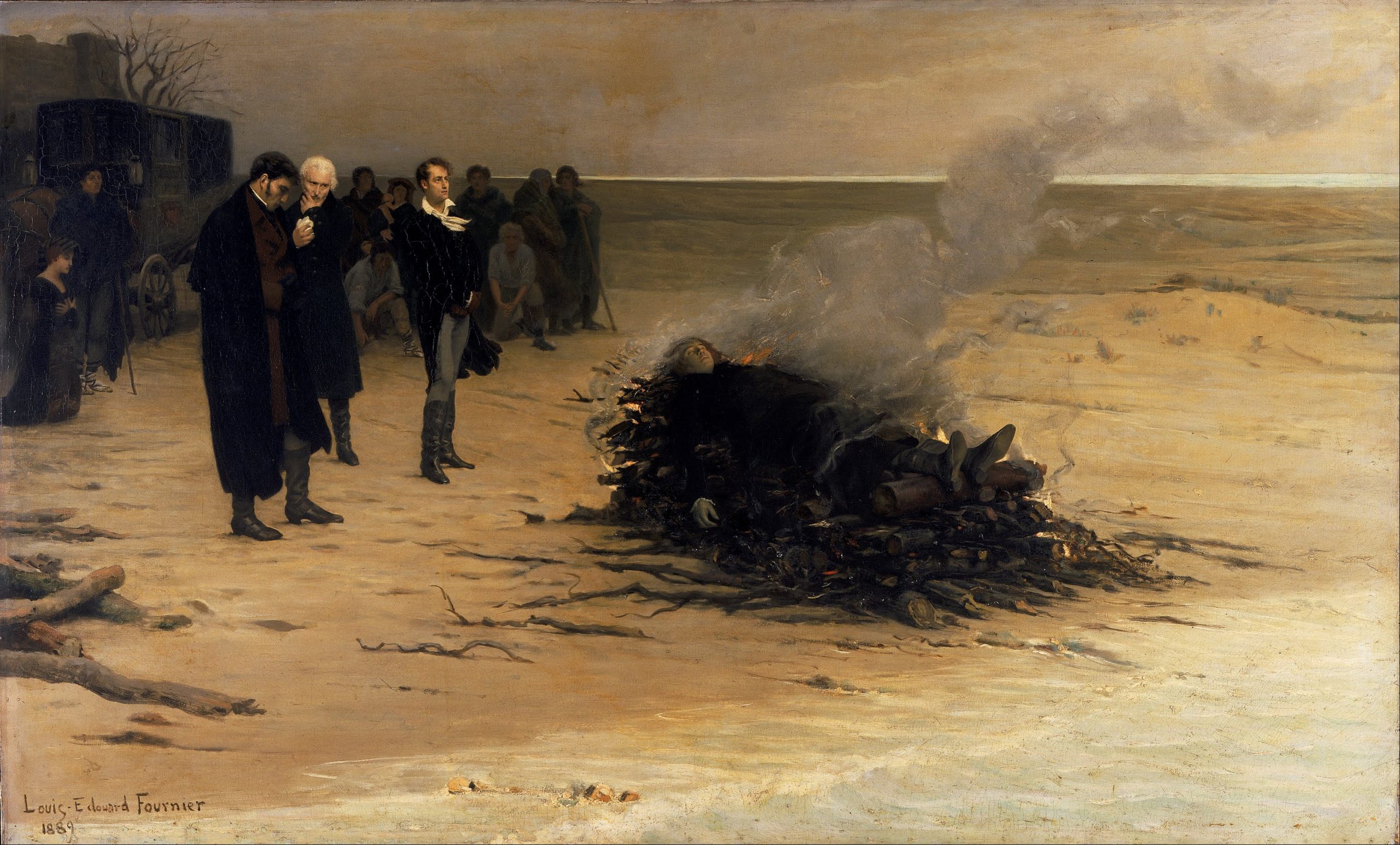
The first half of our episode looks at the strange circumstance surrounding the death, in 1822, of Romantic poet Percy Bysshe Shelley, and the postmortem keepsake inherited by his wife Mary Shelley.
Louis Fournier’s “The Funeral of Shelley,” 1889.
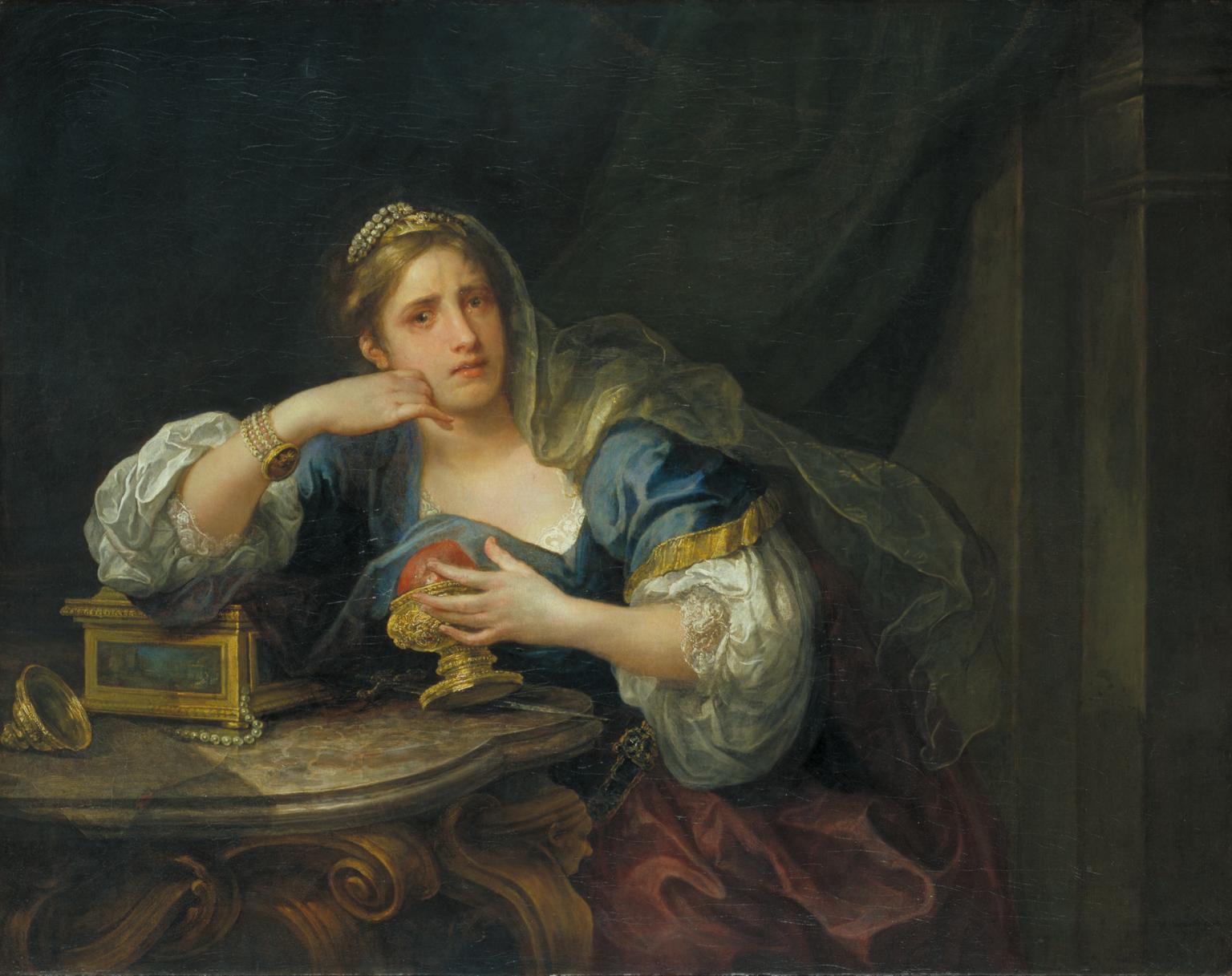
The second half examines two gruesome narratives taken from the 14th century, both from Giovanni Boccaccio’s The Decameron, namely that of the ill-fated lovers Ghismonda & Guiscardo (First Story, Day Four) and of the tragic romantic exploits of Guilhem de Cabestaing (Ninth story, Day Four). Incidentally, our Valentine’s Day show from last year also explores another gruesome tale from The Decameron.
De Cabestaing was an actual historical figure, a Catalan ministrel, whose fictional vida (biography) was often attached to collections of his ballads and served as Boccaccio’s inspiration.
We also look at the Ley of ’Ignaure, a chivalric romance written by the Burgundian French author, Renaud de Beaujeu, probably around the year 1200. This was likely the source of Cabestaing’s vida, Boccaccio’s stories, and the English-Scottish ballad, “Lady Diamond,” from which we also hear a snippet.
“Sigismunda Mourning over the Heart of Guiscardo 1759 William Hogarth
Transylvania’s vampire lore inspired the setting of Bram Stoker’s Dracula, if not the character of the Count, and encompasses not only undead monsters, but living beings akin to witches. (The show is introduced with an audio snippet from Maria Tănase, premiere interpreter of Romanian folk song.)
Mrs. Karswell begins the show, reading a passage Stoker wrote for Jonathan’s Harker’s Transylvania travel journal kand its source in an 1855 essay by Emily Gerard, “Transylvania Superstitions.” Originally from Scotland, Gerard developing an interest in the local folklore while living abroad and expand her essay in the 1888 book, The Land Beyond the Forest. She seems to have derived a fair amount of her vampire lore from a German scholar, Wilhelm von Schmidt, who in 1865 article contributed an article on the subject to the Austrian Review.
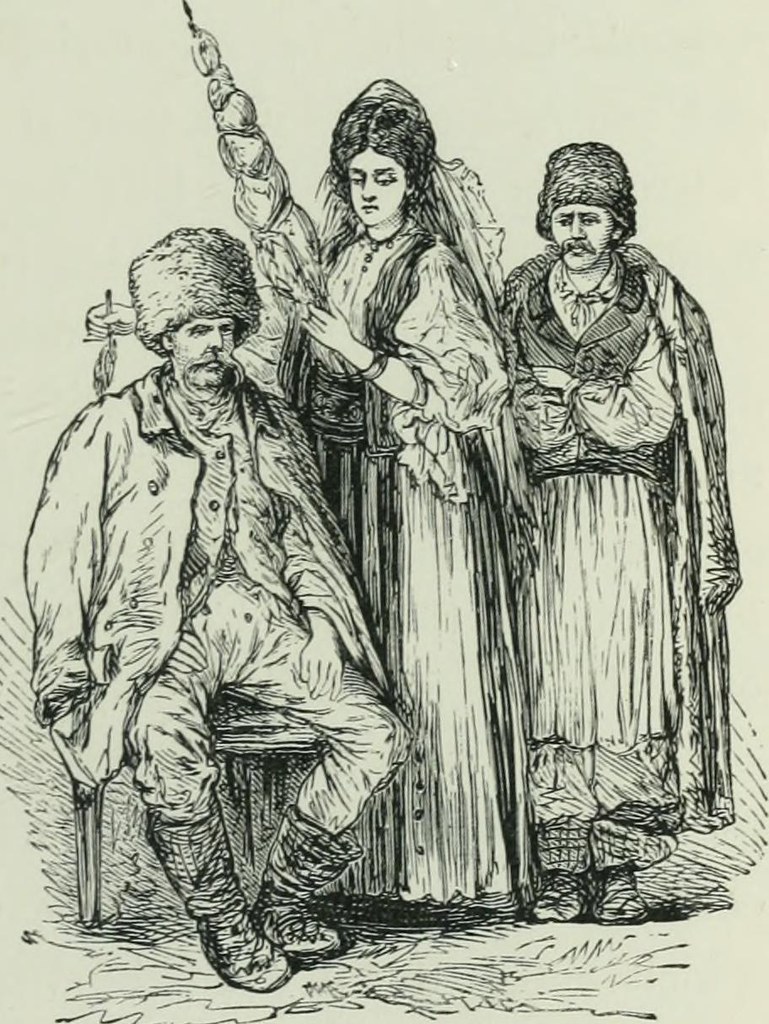
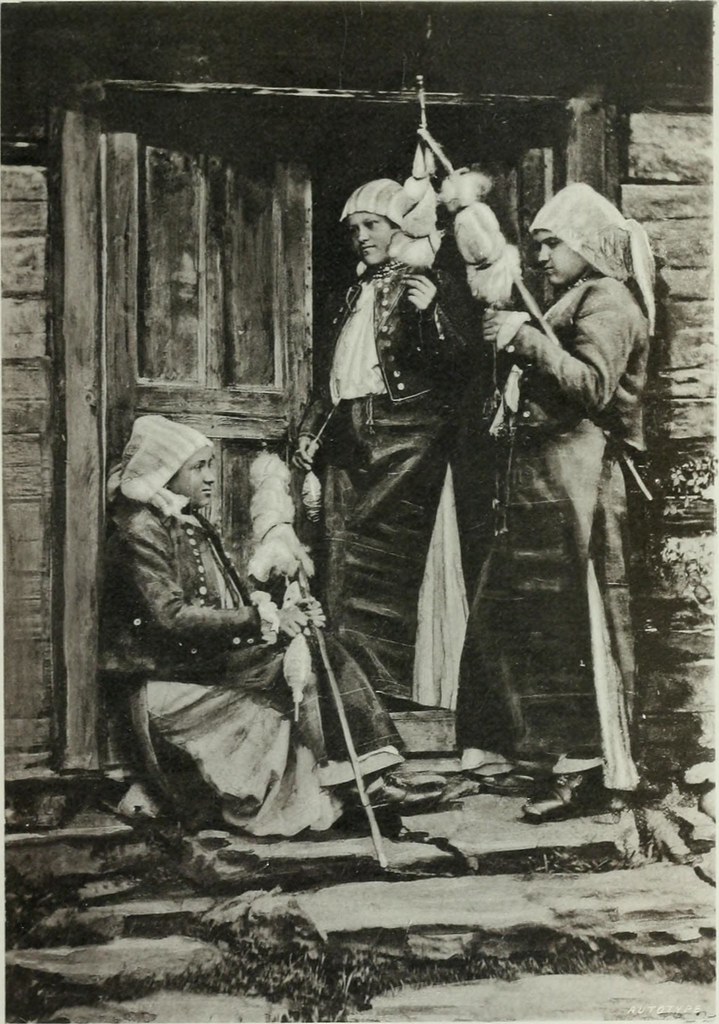
Illustration from “The Land Beyond the Forest”
While much of Gerard and von Schmidt’s information seems well sourced, the nomenclature used for vampires is incorrect. The word “nosferatu” put forward by the two folklorists and repeated by Stoker in his novel as the common Transylvanian word for “vampire” is not actually a Romanian word — but we sort out the confusion.
In Romanian, there are two words for vampiric beings, which Gerard subsumed under “nosferatu.” They are moroi and strigoi (male forms, plural moroii, strigoii). Strigoi seems to be a more expansive category and is discussed more in the folklore, but both share many traits including behaviors, preventatives, and modes of destruction. Moroii and strigoii tend to blur together along with two other entities, vârcolaci, and pricolici, which might be closer to our concept of the werewolf (something for a later show).
Before diving into the details on these creatures, I provide a note on two sources used for the episode, chose as they seem better grounded than Gerard’s in Romanian language and culture. The first is by Agnes Murgoci, a British zoologist, whose marriage brought her to Romania and into contact with Tudor Pamfile, a well known native-born folklorist, whose tales of vampires Murgoci translates in the source article: “The Vampire in Roumania,” published in the journal Folklore in 1926. The other source is a Romanian language book from 1907: Folk Medicine, by Gr. Grigoriu-Rigo, in which I found a large and unexpected trove of regional vampire lore.
Illustration from “The Land Beyond the Forest”
While living an evil life makes one more likely to become a strigoi or moroi, through no fault of their own, an individual who does not receive proper burial rites, will live on to destroy those who failed to fulfill their funereal duties — namely, his family and relations. We have a look at some of the old burial custom, which includes and audio snippet of bocet, a form of traditional lamentation offered at funerals.
We then dig into the moroi and traits its shares with the strigoi: the tendency to attack family members, similar preventatives and modes of destruction as well as shared methods detection of thevampire in its grave.
The strigoi in some ways is closer to the pop-culture vampire — unlike the moroi, it’s sometime explicitly said to drink blood, and garlic is a primary prophylactic. Alongside its practice of destroying loved ones, we hear of some peculiar incidents in which the strigoi also engages with its family in more neutral or even helpful (if unwanted) ways.
We then have a look at livingstrigoii, that is, strigoii fated to become undead after burial but in life exhibiting supernatural abilities and evil inclinations. In many cases, these beings bear comparisons to witches. Possessing the evil eye and the ability to leave the sleeping body in another form (usually a small animal) are examples of this.
Some methods of preventing a living strigoi from rising from its grave are discussed as well as means of destroying these creatures. Techniques employed against the moroi, while simlar occasionally include additional techniques, such as application of tar or quicklime to the body. Priests’ blessings and spells by benevolent wise women can also be employed (and we hear an audio example of the latter).
The remainder of our show consists of vampire folk tales collected by Tudor Pamfile as provided via Murgoci’s translations. The first pair of stories illustrate the resemblance between living strigoii and witches. These are followed by tales of male strigoii pursuing women vaguely prefiguring the pop-culture vampire Stoker birthed.
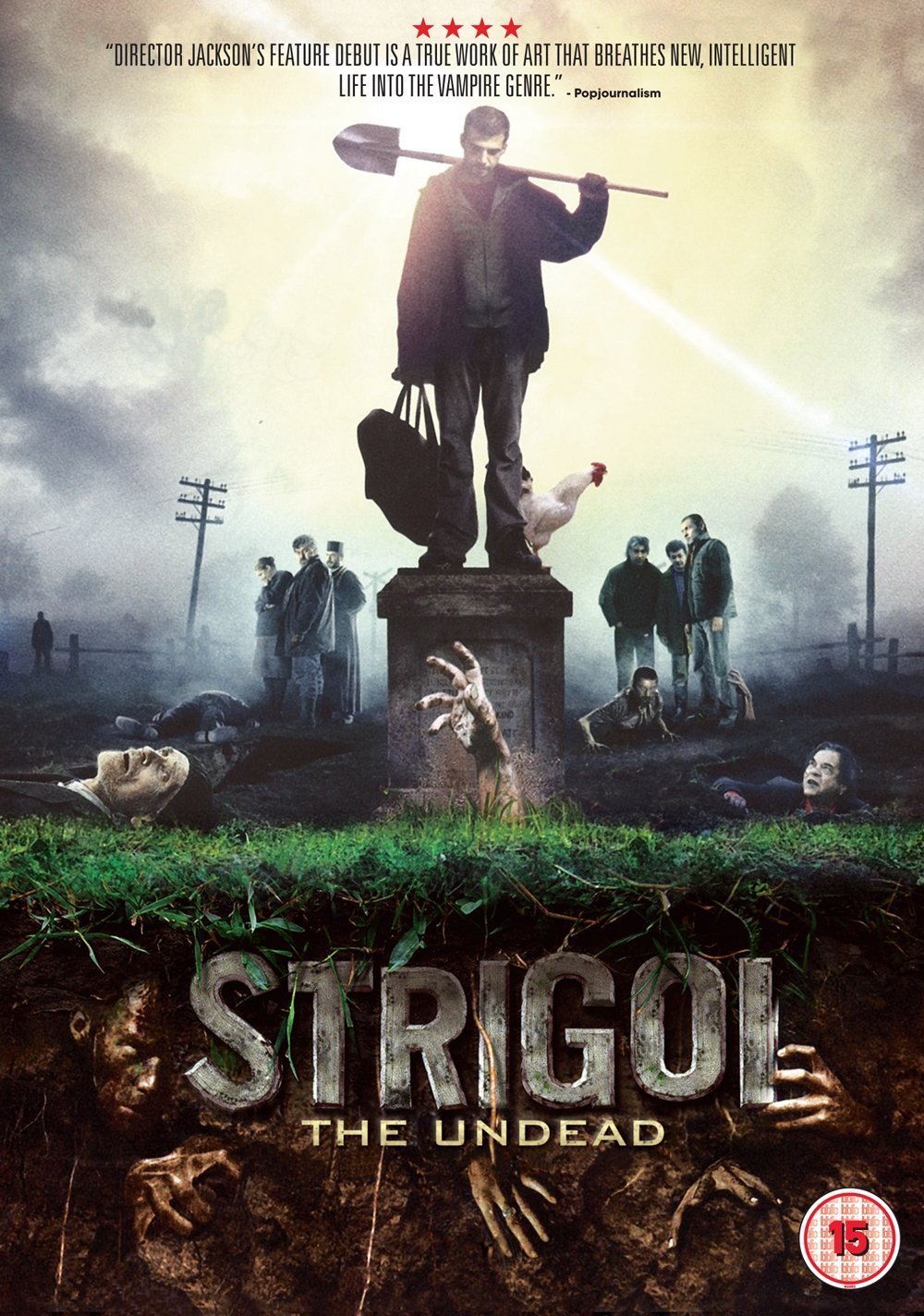
Customs of November 29, the “Night of the Strigoi” in Romania, are then described along with its folkloric significance and relationship to St. Andrew, followed by a clip from the 2009 British comedy, Strigoi.
Though no longer common in Transylvania, in rural regions toward Romania’s Bulgarian border, belief in vampires is still part of life. We hear a bit of a Romanian news segment on a poltergeist-like vampire plaguing the largely Romani village of Sohatu followed by a 2004 case from the village Celaru, which made international news when the body of an alleged vampire was disinterred and its heart burned.
The musical closer to the show is by the horror host Zacherley.
Four our third year, we embrace the old tradition of seasonal ghost-storytelling. This year Mrs. Karswell reads for us a tale written by Edmund Gill Swain, from his 1912 collection Stoneground Ghost Tales (“Stoneground” here being the name of a particularly haunted but fictional English village.)
Swain was a Cambridge colleague of M.R. James, the master of the modern ghost story and proponent of Christmas as a time for telling ghostly tales. We heard a story of his in our 2018 Christmas episode, and a supernatural story written by Dickens’ (not the one you’re thinking) in our 2019 show, should you want to check those out too.